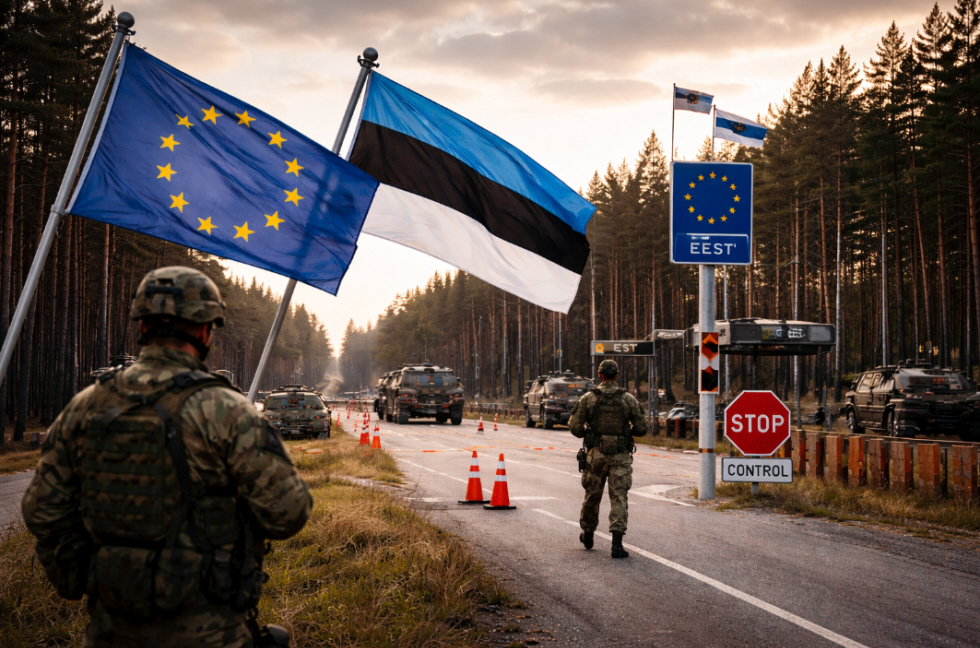
Estonian authorities have warned of potential security risks for Europe in a post-war scenario following a possible ceasefire in Ukraine. Estonia’s Foreign Minister, Margus Tsahkna, expressed concerns about the future of demobilized Russian soldiers and their possible impact on regional stability. According to Tsahkna, there are fears that Moscow could redirect large numbers of former combatants toward indirect pressure tactics or hybrid activities across Europe.
He emphasized that these warnings are part of a preventive security discussion rather than confirmation of any concrete plans. In this context, the Estonian foreign minister proposed that the European Union consider entry restrictions into the Schengen free-travel zone for Russian citizens who directly participated in the war in Ukraine. The measure, he said, would aim to strengthen security controls after the conflict.
The proposal fits into a broader debate within the European Union on how to manage post-war risks. Several governments have noted that a ceasefire would not automatically reduce tensions or eliminate non-conventional security threats. From Tallinn, officials stress that countries on NATO’s eastern flank are compelled to adopt a cautious outlook. Estonia, which shares a long border with Russia, has consistently been among the most vocal states warning about the long-term security implications of the war.
The concept of “hybrid threats” is central to this discussion. These include actions that fall short of open warfare, such as disinformation campaigns, sabotage, social pressure, or cross-border criminal activity, all of which can be difficult to attribute directly. European officials have noted that any decision on travel restrictions would require consensus among EU member states and a clear legal framework.
At present, no unified policy exists, though the issue has begun to gain traction in internal discussions. Statements from Estonia reflect growing concern in Eastern Europe about the post-war landscape in Ukraine. Beyond the battlefield, regional governments argue that Europe’s long-term stability will depend on how security challenges are managed after any potential peace agreement.