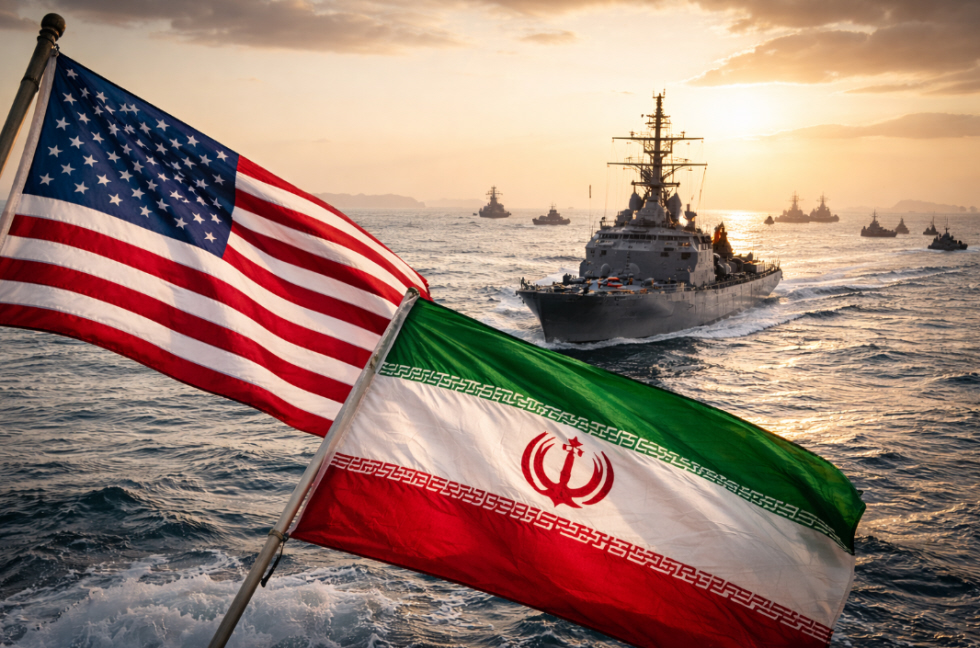
U.S. President Donald Trump said Iran is engaged in “serious discussions” with Washington, amid a steady build-up of American military forces in the Persian Gulf. His remarks point to a scenario of diplomacy conducted under strong strategic pressure, in a relationship long defined by mistrust and confrontation. Trump expressed hope that the talks could lead to an “acceptable” outcome, without offering specific details on their scope or timeline.
The White House has reiterated that its core objectives remain curbing Iran’s nuclear ambitions and preserving regional stability. From Tehran, senior security official Ali Larijani confirmed that a negotiation framework is taking shape. While he avoided outlining concrete commitments, his comments suggest that communication channels remain open despite heightened tensions.
The diplomatic contacts follow weeks of incremental U.S. military deployments in the region, widely viewed as a deterrence strategy. Washington appears intent on strengthening its negotiating position while keeping military options visible as leverage. Trump has repeatedly warned that the United States would not rule out intervention if Iran advances its nuclear program or continues its crackdown on anti-government protests. Such statements have intensified rhetoric on both sides and added to regional uncertainty. Iranian officials have responded with firm warnings of their own.
Authorities said any aggression, whether by land or sea, would be met with an immediate and forceful response, underscoring Tehran’s rejection of unilateral pressure. Against this backdrop, Iran announced it would begin two days of live-fire naval exercises in the Strait of Hormuz. The narrow waterway is one of the world’s most critical shipping routes, carrying a significant share of global energy supplies.
The convergence of diplomatic contacts, military posturing, and naval maneuvers highlights a delicate balance between dialogue and displays of strength. While there are no immediate signs of open conflict, the situation remains fragile, and miscalculation could carry far-reaching regional consequences.