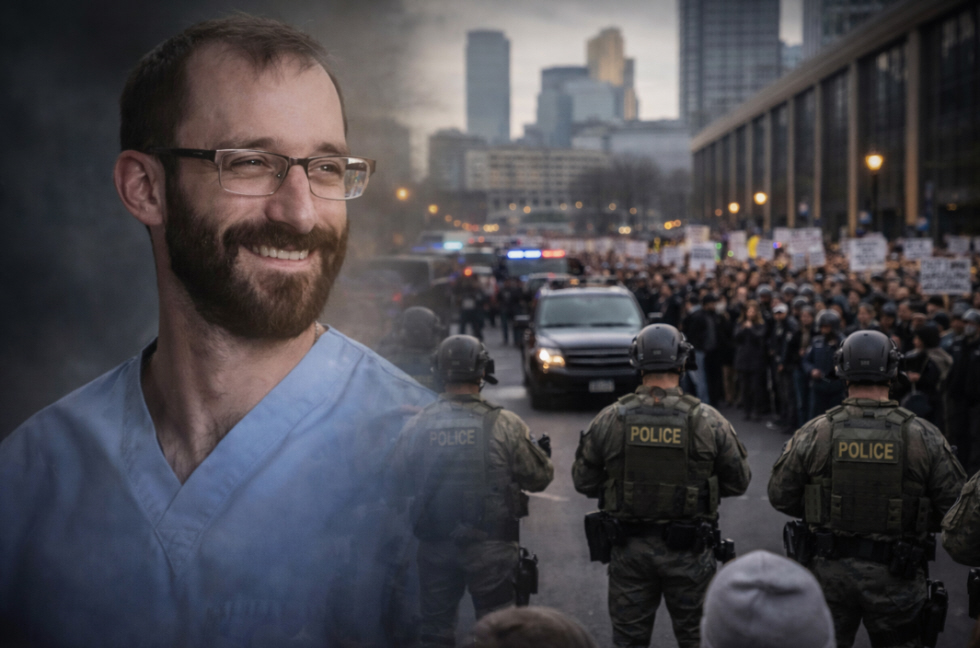
The fatal shooting of Alex Pretti, a 37-year-old American nurse, by federal immigration agents in Minneapolis has ignited widespread protests, institutional tension, and a national debate over the use of force by federal authorities during immigration operations. The incident occurred during a federal operation in a residential area of the city, when heavily armed agents restrained an individual on a public sidewalk.
Amid the struggle, multiple gunshots were fired, and Pretti collapsed to the ground, remaining motionless as the scene unfolded. Federal authorities have claimed the shooting was defensive, arguing that the individual posed a threat. That explanation, however, has been met with skepticism from local officials and large segments of the public, who are demanding an independent investigation and greater transparency regarding the use of lethal force. The death took place amid a significant federal deployment in Minneapolis, part of a broader immigration enforcement surge ordered from Washington.
The presence of these agents, operating with limited coordination with state and city authorities, had already generated friction before the shooting occurred. Minnesota’s governor and the mayor of Minneapolis reacted sharply, calling for the immediate withdrawal of federal agents. Both accused the federal government of reckless escalation, lack of accountability, and endangering civilian lives through poorly coordinated operations. The controversy quickly expanded beyond Minnesota, evolving into a national issue. Political leaders in several states began questioning the tactics used by federal immigration agencies and calling for a reassessment of the legal and operational frameworks governing their actions.
Civil rights organizations, labor groups, and business leaders also weighed in, warning that the escalating confrontation undermines social stability, erodes trust in public institutions, and creates an atmosphere of uncertainty detrimental to economic and community cohesion. Despite freezing temperatures, protests continued for days, with thousands of demonstrators voicing not only outrage over the shooting but also broader opposition to what they see as an increasingly militarized and disconnected immigration policy.
The episode has further deepened political polarization across the country. While Democratic lawmakers push for budget restrictions and structural reforms, Republican voices continue to defend federal agents as essential to border enforcement and national security. Beyond the immediate case, the events in Minneapolis raise a fundamental strategic question: how far federal authority should extend into local communities, how force is applied in civilian settings, and what political and institutional costs arise when enforcement policies move forward without consensus or coordination in a deeply divided nation.