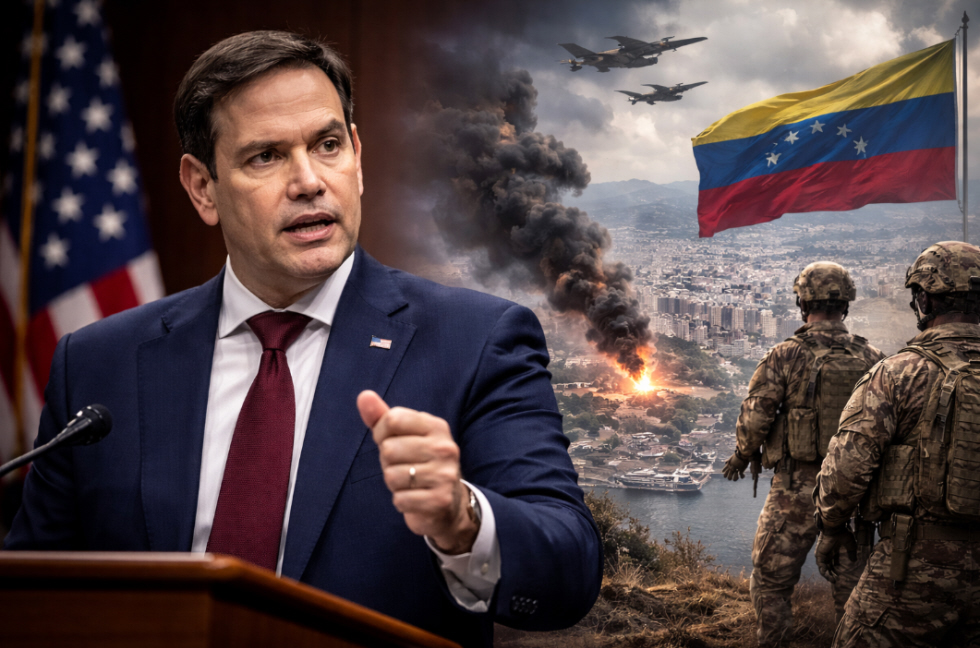
U.S. Secretary of State Marco Rubio warned that the administration of President Donald Trump is prepared to take additional military action against Venezuela if the country’s interim leadership strays from expectations set by Washington. The statement was delivered during a hearing before the Senate Foreign Relations Committee. Rubio made clear that the United States is not at war with Venezuela and that there is no military occupation of the country.
However, he emphasized that the use of force remains an option if diplomatic or political efforts fail to secure the level of cooperation the administration expects. The secretary of state argued that current policy aims to ensure stability and compliance while avoiding a broader escalation. At the same time, he stressed that Washington will not hesitate to act decisively should it deem the situation to require stronger measures.
The remarks follow a recent operation that led to the capture of former Venezuelan president Nicolás Maduro and his transfer to the United States to face drug trafficking charges. Rubio defended the action as a law enforcement operation rather than an act of war. During the hearing, Rubio also justified additional measures taken by the Trump administration, including strikes on vessels suspected of drug smuggling and the seizure of oil tankers linked to sanctions violations. He rejected accusations that the administration is overstepping constitutional limits, insisting that the actions fall within the executive branch’s responsibility to protect national interests and regional security.
The firm tone of the warning was intended to send a message both to Venezuela’s interim leadership and to the international community. Washington seeks to underline that while political solutions are preferred, sustained pressure remains central to its strategy. At the same time, Rubio faces the challenge of explaining this approach to a divided Congress, where some lawmakers have raised concerns about the scope and long-term consequences of relying on military pressure in foreign policy.
The hearing also took place amid a broader reassessment of U.S. foreign policy, with multiple global challenges prompting debate over the limits and effectiveness of force as a diplomatic tool. In this context, Rubio’s comments reflect a strategy that blends restraint with warning and leverage. The central message is that the United States does not seek open conflict, but will act if it believes its strategic interests in the region are at risk.