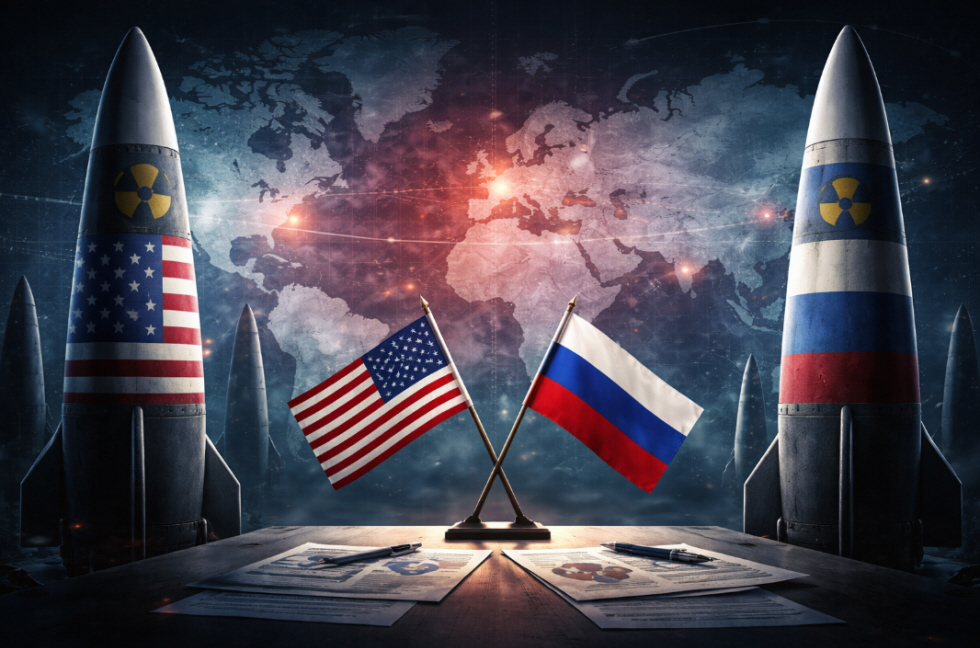
The New START treaty, signed in 2010 between the United States and Russia, has for more than a decade served as one of the last remaining pillars of nuclear arms control between the world’s two leading nuclear powers. Its primary purpose has been to limit the number of deployed strategic nuclear warheads and delivery systems, while maintaining verification mechanisms designed to prevent uncontrolled escalation. The agreement was originally set to last ten years and was extended for an additional five years in 2021, marking one of the final moments of strategic cooperation between Washington and Moscow.
That extension is set to expire on February 5, and there is currently no formal framework in place to ensure the continuation of nuclear limits beyond that date. In response to the looming deadline, Russian President Vladimir Putin has proposed informally maintaining the existing limits on missiles and nuclear warheads for an additional year. The proposal is intended to buy time for broader negotiations aimed at redefining a new arms control structure under today’s far more fractured geopolitical conditions. So far, Washington has not issued a definitive response.
The White House has stated only that President Donald Trump will determine the future course of nuclear arms control according to his own timetable, without confirming whether the United States is open to a temporary extension or immediate negotiations. The lack of a clear U.S. position has been viewed in Moscow as a source of strategic uncertainty. Former Russian President Dmitry Medvedev, who signed the New START treaty, has described Trump as unpredictable in matters of foreign policy, while emphasizing that Russia is prepared for any outcome once the treaty expires.
Trump, however, has repeatedly signaled that he is not interested in a simple extension of New START. He argues that the treaty should be replaced by a “better” agreement—one that reflects current geopolitical realities. Central to his position is the concept of pursuing broader nuclear “denuclearization.” That approach introduces an additional layer of complexity: China. The U.S. administration has insisted that any future arms control agreement must include Beijing, given China’s expanding military and technological capabilities. From Washington’s perspective, maintaining a bilateral framework while China’s arsenal grows would be strategically unbalanced.
China has firmly rejected that idea. Chinese officials argue that their nuclear arsenal remains significantly smaller than those of the United States and Russia, and that there is no parity that would justify equal obligations under a trilateral treaty at this stage. If New START expires without replacement, it would mark the first time in decades that the world’s two largest nuclear powers are not bound by a formal treaty limiting and monitoring their strategic arsenals.
While this does not automatically mean an immediate buildup of weapons, it would significantly reduce transparency and increase mutual suspicion. At a time of heightened global tensions, prolonged regional conflicts, and intensifying competition among major powers, the future of nuclear arms control has entered a period of renewed uncertainty. What follows the expiration of New START will not only shape U.S.-Russian relations, but will also have far-reaching implications for global strategic stability in the years ahead.