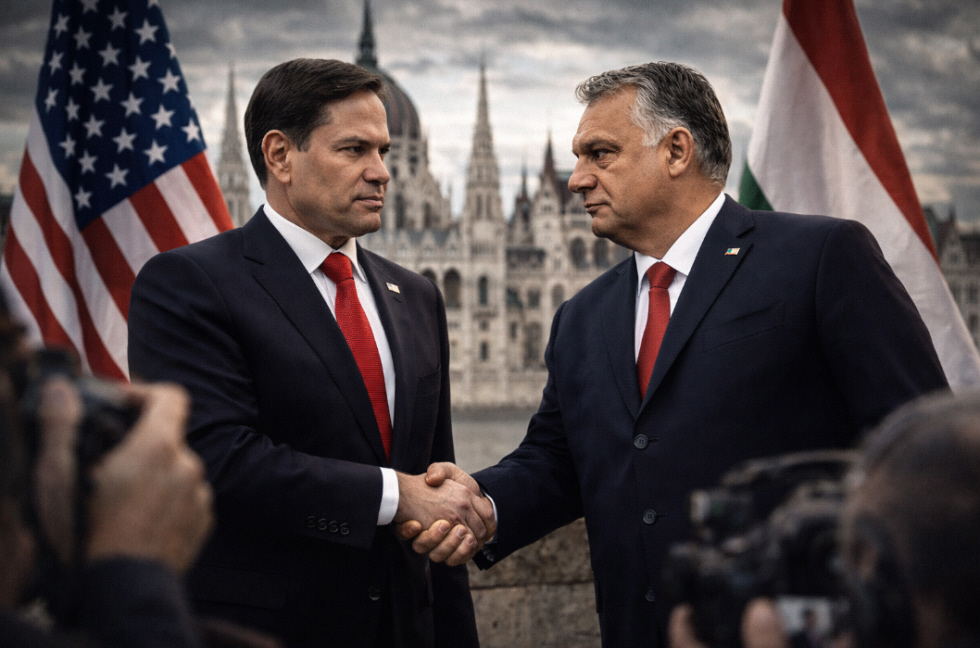
The recent visit of the U.S. Secretary of State to Budapest has drawn significant attention across Europe, particularly because it coincided with Hungary’s parliamentary election campaign. Officially framed as a diplomatic engagement aimed at strengthening bilateral relations, the timing of the visit inevitably added political weight to the encounter. During the meetings, the tone of the statements delivered was notably positive toward Prime Minister Viktor Orbán’s leadership.
Expressions of strategic cooperation and political alignment were interpreted by observers as a diplomatic gesture of support at a sensitive electoral moment. While no formal endorsement of Orbán’s candidacy was issued, the symbolism of the visit and the language used conveyed a clear message of closeness between Washington and Budapest. In international politics, timing and tone often carry as much meaning as official declarations.
U.S.–Hungarian relations have evolved through different phases in recent years, particularly concerning NATO cooperation, regional security, and energy policy. Hungary’s geographic and political position in Central Europe gives it strategic importance within the broader transatlantic framework. At the same time, Orbán has pursued a foreign policy approach that blends NATO and European Union membership with an independent stance on several major issues. This has occasionally generated tensions within the European bloc, while simultaneously creating space for distinct bilateral dialogues.
The U.S. visit can also be viewed within a broader strategy to reinforce alliances along NATO’s eastern flank. In an international environment shaped by the war in Ukraine and intensified competition among major powers, transatlantic coordination remains a key pillar of Western security planning. For Hungary’s political opposition, such high-level diplomatic gestures may raise concerns about indirect influence in the domestic political climate. However, from Washington’s perspective, the trip can be framed as legitimate diplomacy aimed at maintaining strategic alignment with an ally. International visits during election periods often carry symbolic influence.
Even without explicit electoral endorsement, they can strengthen perceptions of international legitimacy for an incumbent government. The dynamic between Washington and Budapest also reflects ideological affinities within certain political circles. Such alignments can translate into implicit signals of support without crossing the line into direct electoral intervention.
Ultimately, the Secretary of State’s visit to Hungary does not constitute formal interference in the country’s elections. Nevertheless, it sends a meaningful diplomatic signal. In international affairs, strategic gestures are rarely accidental, and their interpretation depends heavily on context and timing.