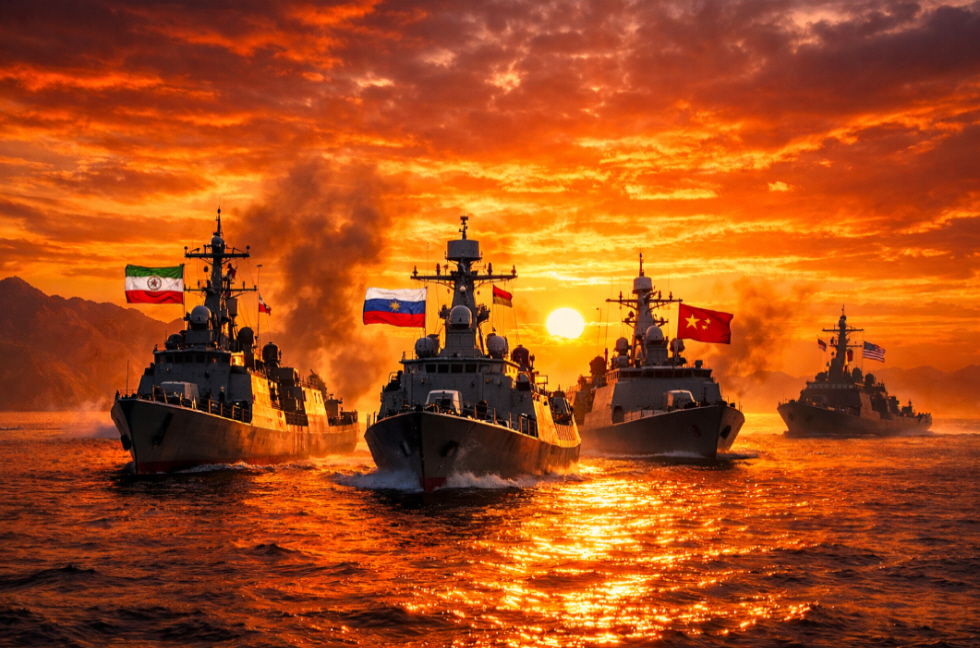
Iran, Russia, and China have deployed naval vessels to the Strait of Hormuz for joint live-fire exercises, raising tensions in one of the world’s most strategically vital waterways. The operation, known as “Maritime Security Belt-2026,” unfolds at a delicate moment in diplomatic relations between Tehran and Washington. The Strait of Hormuz is widely regarded as a critical artery of global energy trade.
A significant portion of the world’s oil supply passes through this narrow corridor, making any military activity in the area a matter of immediate concern for international markets and Western capitals. The simultaneous participation of Russia and China alongside Iran sends a clear signal of strategic alignment. Although similar drills have taken place in previous years, the current geopolitical context — marked by ongoing nuclear discussions between the United States and Iran — adds heightened political sensitivity to the deployment.
The exercises reportedly include coordinated combat simulations, tactical maneuvers, and live-fire operations, reinforcing the demonstrative nature of the exercise. International observers view the drills as a message of deterrence directed not only at Washington but also at its regional allies. The timing appears far from coincidental. While American and Iranian negotiators engage in talks aimed at preventing military escalation, the presence of Russian and Chinese vessels in the strait strengthens the perception that Tehran is not isolated on the global stage.
For Moscow and Beijing, naval cooperation with Iran also represents an opportunity to project influence in the Middle East. Both nations have steadily expanded their strategic presence in the region, deepening energy, military, and commercial ties with various regional actors. Gulf nations are closely monitoring the developments. Traditionally aligned with the United States, several regional governments are cautious about any shift in the security balance that could affect maritime stability and energy exports.
Energy markets tend to react sensitively to military developments in Hormuz. Although no disruption to shipping traffic has been reported, heightened tensions in the area often increase risk perception and contribute to oil price volatility. Washington has consistently reaffirmed its commitment to ensuring freedom of navigation in international waters while maintaining diplomatic channels open with Tehran.
Yet the combination of negotiations and military demonstrations underscores the fragile equilibrium currently in place. For now, the drills continue according to schedule, but their symbolism extends beyond routine military cooperation. In an increasingly polarized global environment, the joint deployment of Iran, Russia, and China at such a critical chokepoint highlights the enduring weight of geopolitical rivalries in shaping international security.