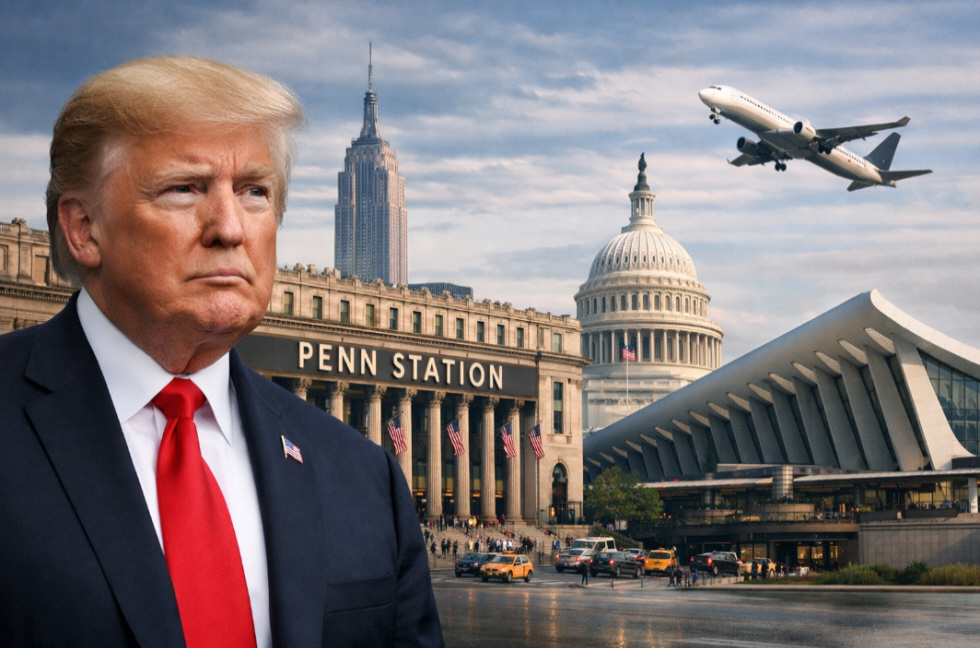
U.S. President Donald Trump sparked fresh controversy after reportedly linking the release of frozen federal infrastructure funds to an unusual demand: renaming major public landmarks in his honor. The proposal blended administrative authority with symbolic recognition at a national level. According to information circulating in Washington, Trump suggested that New York’s Penn Station and Washington-area Dulles International Airport be renamed after him.
In return, the federal government would unlock billions of dollars earmarked for infrastructure projects in New York and New Jersey. Both states, led by Democratic administrations, have been awaiting approval for critical transportation and modernization funding. The reported offer was seen by many as a direct form of political leverage during an already tense relationship between the White House and Congress.
The central figure approached in these discussions was Senate Minority Leader Chuck Schumer, one of the most influential Democrats in Washington and a key representative of New York. The initiative, however, failed to gain traction. Schumer firmly rejected the proposal, making it clear that public funds should not be negotiated in exchange for symbolic gestures. His position emphasized that infrastructure investment must be based on public need and policy priorities, not personal recognition.
The episode reignited debate over presidential power and the boundaries between governance and self-promotion. Critics argue the move reflects an overly personal approach to authority, while Trump allies insist it was a misunderstood negotiating tactic. Regardless of interpretation, the situation highlighted ongoing friction between the executive and legislative branches, particularly as infrastructure spending remains a major political battleground.
For now, the funds remain frozen and the names of Penn Station and Dulles Airport remain unchanged, adding another chapter to the series of controversies that have shaped Trump’s political legacy.