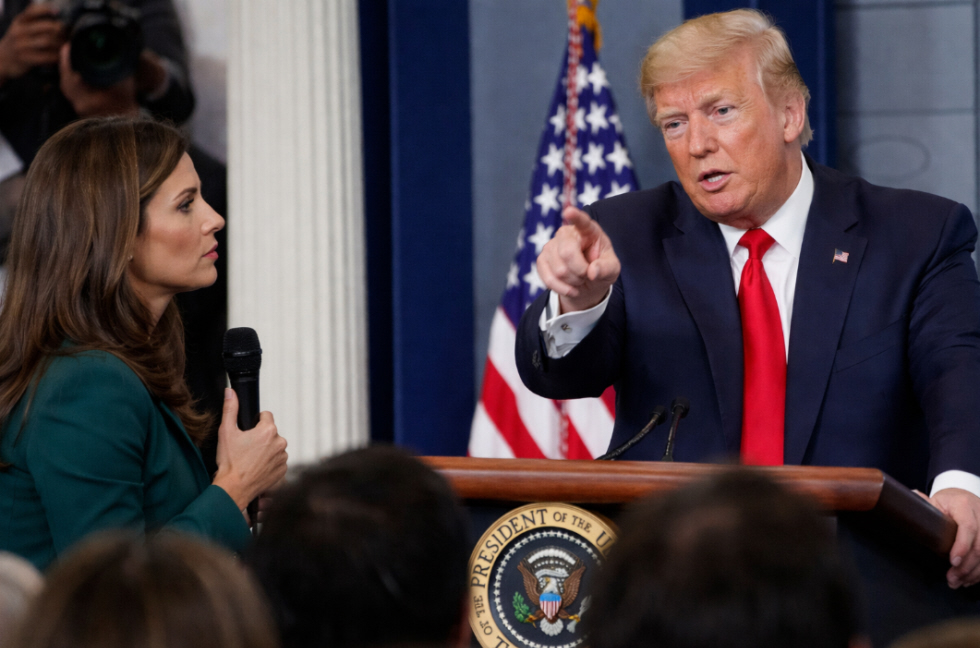
The President of the United States, Donald Trump, was involved in a tense exchange with the press during a recent appearance at the White House after being questioned by CNN journalist Kaitlan Collins about files related to Jeffrey Epstein. The moment drew attention not for its novelty, but for what it revealed about the ongoing friction between political power and the media. The question prompted a firm reaction from the president, who made clear his discomfort with revisiting an issue he considers closed. From his perspective, the focus on Epstein-related matters diverts attention from topics he believes are more pressing for the country and its citizens.
Trump expressed frustration with what he described as repetitive questioning and criticized the role of certain media outlets in shaping public discourse. In doing so, he argued that persistent emphasis on past controversies does not contribute to constructive debate or effective governance. The exchange included personal remarks directed at the journalist, reflecting a communication style the president has employed on multiple occasions when confronting lines of questioning he views as unfair or politically motivated. These moments often turn brief press interactions into broader public discussions.
For the journalist involved, continuing the question aligned with the traditional role of the press in seeking clarification and accountability, even when such inquiries are unwelcome. The interaction highlighted the inherent tension between journalistic persistence and executive authority. This was not an isolated incident. Similar reactions have occurred in previous encounters involving questions about the Epstein files, underscoring how sensitive the topic remains within political and media circles alike.
Beyond the immediate exchange, the episode illustrates a broader dynamic in modern politics, where public officials and journalists operate in an environment marked by high polarization and heightened scrutiny. In such contexts, tone and framing often carry as much weight as substance. At the same time, moments like these raise questions about how public discourse is shaped when disagreements shift from policy to personal confrontation.
The focus can quickly move away from the issue at hand toward the manner in which it is discussed. The incident invites reflection on the balance between firm leadership and open engagement with the press, as well as the responsibility of journalists to persist while maintaining professionalism.
Both roles play a central part in informing the public. Ultimately, what remains most significant is not the exchange itself, but the reminder that a functioning democracy depends on an informed public, a free press, and a level of mutual respect that allows critical questions to be asked and answered within an institutional framework.