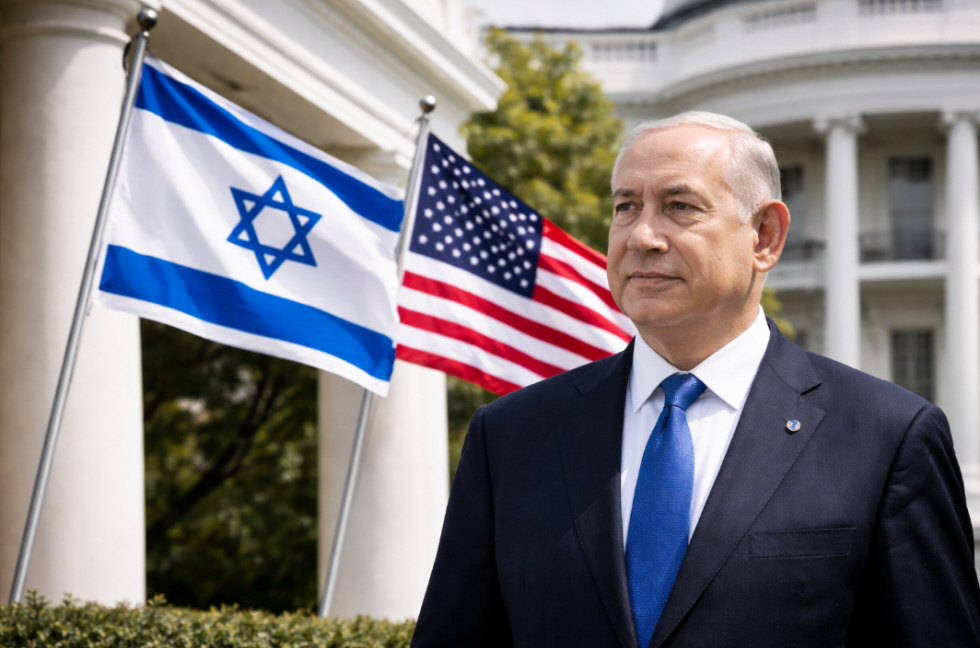
Israeli Prime Minister Benjamin Netanyahu is set to visit Washington this week amid growing concern in Israel over the direction of renewed diplomatic contacts between the United States and Iran. The trip comes at a sensitive moment, following the launch of indirect talks between Washington and Tehran that have reignited fears within Israel’s leadership of a potential agreement viewed as insufficient on security grounds.
Netanyahu had initially planned to travel to the United States in mid-February to attend the first meeting of the Peace Council promoted by President Donald Trump. That schedule, however, was brought forward. The decision to advance the visit reflects a sense of urgency triggered by the first round of US-Iran contacts, which recently took place in Oman, a country often used as a discreet diplomatic channel. Those discussions involved key figures from Trump’s inner circle, including his son-in-law Jared Kushner and special envoy Steve Witkoff, underscoring the importance the White House attaches to the process.
From Israel’s perspective, the central concern is that the United States may accept concessions that fail to adequately address Iran’s nuclear ambitions or its regional influence. Netanyahu has consistently taken a hard line against engagement with Iran, arguing that Tehran poses an existential threat to Israel and a destabilizing force across the Middle East.
The Washington visit is widely seen as an effort to directly influence US policy before negotiations with Iran move toward more concrete commitments. At the same time, the trip highlights the complexity of Israel’s relationship with the Trump administration, characterized by close political alignment but differing tactical views on how to handle Iran.
In this context, the upcoming meetings in Washington are shaping up to be a pivotal moment, with potential consequences not only for US-Iran relations but for the broader strategic balance in the Middle East.