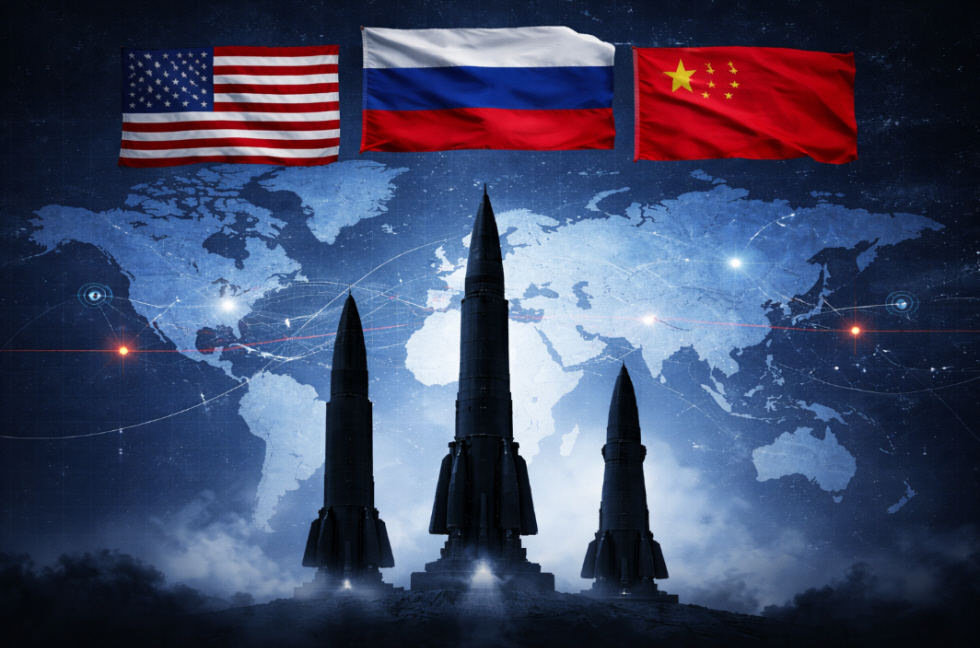
Following the expiration of the New START treaty, Russia has indicated that it will continue to respect the previously established limits on its nuclear arsenal — but under one clear condition: that the United States does not exceed those same thresholds. The position reflects a self-imposed moratorium aimed at preserving strategic balance despite the absence of a formally binding agreement.
The New START treaty, signed in April 2010 by U.S. President Barack Obama and Russian President Dmitry Medvedev, capped deployed nuclear warheads at 1,550 for each country. For more than a decade, the agreement served as one of the central pillars of arms control between the world’s two largest nuclear powers. With the formal expiration of the framework, the international security environment enters a period of heightened uncertainty. Although both sides have expressed interest in negotiating a successor agreement, the current political climate makes progress complex and fragile.
Moscow’s conditional stance signals a strategy of restrained deterrence: maintaining limits as long as Washington does the same. It avoids unilateral escalation while preserving flexibility should the strategic landscape shift. Washington, meanwhile, has argued that any future arms control framework should include China, whose nuclear capabilities have steadily expanded in recent years. Bringing Beijing into negotiations would mark a significant shift in the traditional U.S.–Russia arms control architecture. China has rejected participation under comparable terms, pointing out that its nuclear arsenal remains significantly smaller than those of the two superpowers.
From Beijing’s perspective, there is no parity that justifies entering a trilateral agreement on equal footing. Security analysts warn that the global landscape now combines several destabilizing elements: emerging weapons technologies, hypersonic missile systems, artificial intelligence integrated into military planning, and reduced communication channels between major powers. The absence of a legally binding treaty does not automatically trigger immediate instability, but it weakens the verification and transparency mechanisms that helped sustain mutual confidence.
Without inspections and formal constraints, the margin for miscalculation grows. China’s rise as a consequential nuclear actor introduces an additional layer of complexity to strategic calculations. The bipolar structure that defined much of the Cold War era is gradually giving way to a more multipolar nuclear environment.
In this evolving context, long-term stability will depend not only on formal agreements but also on disciplined political leadership and sustained diplomatic engagement. The direction taken in the coming years may shape global strategic security for decades.