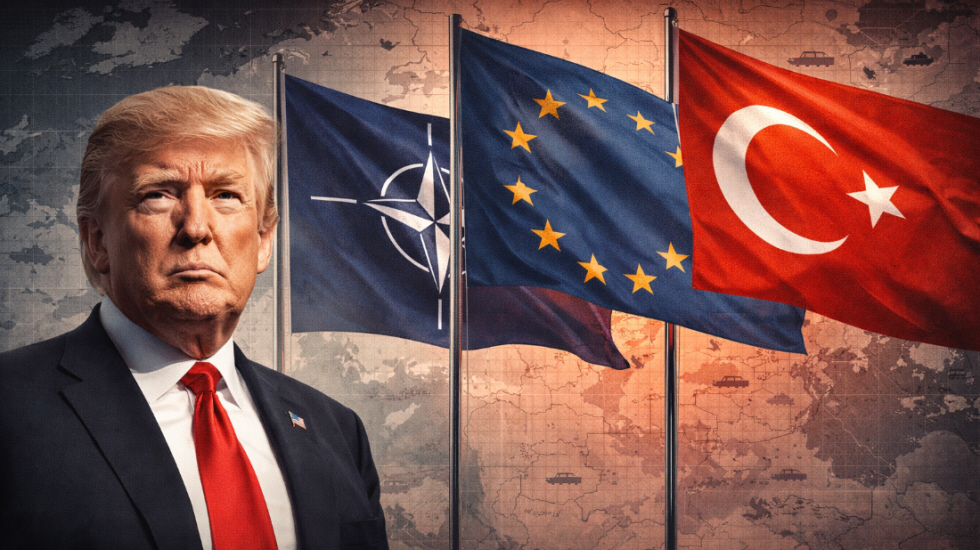
President Donald Trump’s call for NATO allies to assume a greater share of the collective defense burden is not new, but it arrives at a particularly sensitive moment. The accumulation of global conflicts has tested the resilience of traditional alliances. In this context, the demand for balance takes on renewed urgency. The question is no longer whether the debate is valid, but how long it can continue to be postponed.
For decades, the United States has carried the primary weight of NATO’s defense structure, both in resources and operational leadership. This reality has created a dependency that, while ensuring stability, has also limited shared responsibility among members. The perception of imbalance has grown steadily over time. Today, that imbalance faces increasing political pressure. Washington’s position follows a strategic logic: a more balanced alliance is, in theory, a stronger and more sustainable one. However, translating that theory into practice requires redefining long-standing commitments. Not all members are prepared to assume greater responsibilities immediately.
This transition is therefore not only political, but also structural. Turkey emerges as one of the most complex cases within this discussion. Its geographic position makes it a key NATO player, yet its recent decisions have generated tensions with other members. This duality between strategic value and political divergence presents a difficult challenge. The relationship with Ankara will be crucial in any attempt at internal recalibration.
The burden-sharing debate also reflects a broader transformation in the international system. Alliances no longer operate under the same assumptions as in past decades. New actors, new threats, and new priorities are reshaping the global balance. In this environment, NATO faces the need to adapt without fracturing. Supporters of Trump’s position argue that demanding greater commitment from allies is necessary to ensure the organization’s future viability. From this perspective, pressure is not intended to weaken, but to strengthen. A more equitable distribution of resources would enable a more coordinated response.
It would also reinforce the alliance’s internal legitimacy. However, there is a risk that this approach could generate internal friction. The perception of unilateral pressure may be interpreted as imposition, especially by countries with economic limitations or different domestic priorities. NATO’s cohesion depends not only on military capacity, but also on political trust. And that trust can erode if balance is not managed carefully. The current context, marked by tensions across multiple regions, adds urgency to the debate. War, energy crises, and geopolitical shifts demand timely but well-calculated decisions.
NATO cannot afford improvised responses. Every adjustment to its structure must consider both short-term pressures and long-term consequences. Beyond the technical discussion, the core of the debate is deeply political. It is about defining what kind of alliance NATO will be in the future. A structure dependent on a single actor or a genuine coalition of shared responsibilities.
This definition will shape its ability to adapt in an increasingly competitive world. Ultimately, the call for greater allied commitment is not merely a situational demand, but a reflection of a deeper shift in global balance. NATO stands at a turning point. Its ability to evolve will determine its relevance in the years ahead. And in that process, the burden-sharing debate will remain central.
By:
Williams Valverde