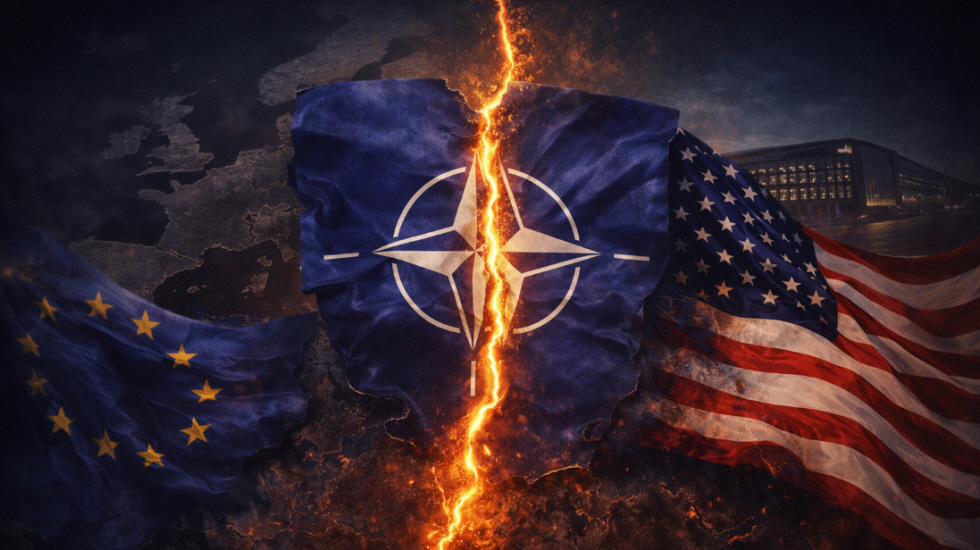
Tensions within the NATO have begun to move into more uncertain territory, where not only operational differences are being debated, but also the future of the alliance itself. In this evolving landscape, recent statements have opened the door to scenarios that once seemed distant. The discussion is shifting from tactical to strategic concerns. The cohesion of the Western bloc is entering a critical phase. The President of the United States, Donald Trump, has once again questioned the role of the alliance in terms that suggest a shift in perspective.
His remarks indicate that Washington’s commitment may increasingly depend on reciprocity from its allies. This introduces a new dynamic into transatlantic relations. The traditional balance is beginning to show signs of strain. In this context, the possibility of a deeper reassessment of the U.S. role within NATO is no longer a marginal topic. While no formal decision has been made, the mere consideration raises concern across Europe. The stability of the alliance heavily depends on U.S. participation. Any shift in that axis would have global consequences.
Recent disagreements surrounding the conflict with Iran have intensified these tensions. Some European countries have adopted a more cautious stance, avoiding direct involvement in military operations. This divergence highlights the limits of coordination within the alliance. Unity remains, but it is no longer absolute. The decision by countries such as Italy to deny authorization for certain military operations from their territory reflects this evolving dynamic. Rather than rejecting the alliance, it represents an assertion of sovereignty in sensitive decisions. Such episodes mark a shift in how internal relationships are managed.
Strategic discipline is giving way to more autonomous choices. From a historical perspective, NATO has weathered major crises, from the Cold War to conflicts in the Balkans and the Middle East. However, the current challenge is different. It is not driven by a clearly defined external threat, but by internal differences in how risks and priorities are perceived. This complexity is redefining the nature of the alliance. Analysts warn that political rhetoric has begun to harden, which could influence public perception of NATO.
The idea of a potential fracture, while still distant, is now part of the conversation. This shift in narrative carries real implications for trust among allies. Words, in this context, shape realities. At the same time, Europe appears to be moving toward greater strategic autonomy, seeking to reduce its dependence on the United States in defense matters. This gradual process could alter the internal balance of the alliance.
The transatlantic relationship is being reshaped around new priorities. Cooperation continues, but under evolving conditions. In Washington, these discussions are also influenced by domestic political dynamics, where foreign policy intersects with national discourse. Decisions about international alliances are not made in isolation.
They reflect broader interests, perceptions, and strategies. NATO thus becomes part of a larger debate. For now, the situation remains open and evolving. There is no imminent rupture, but clear signs of transformation. NATO continues to be a key pillar of the international order, even as it faces a period of redefinition. What unfolds in the coming months will be critical. The future of the alliance can no longer be taken for granted.