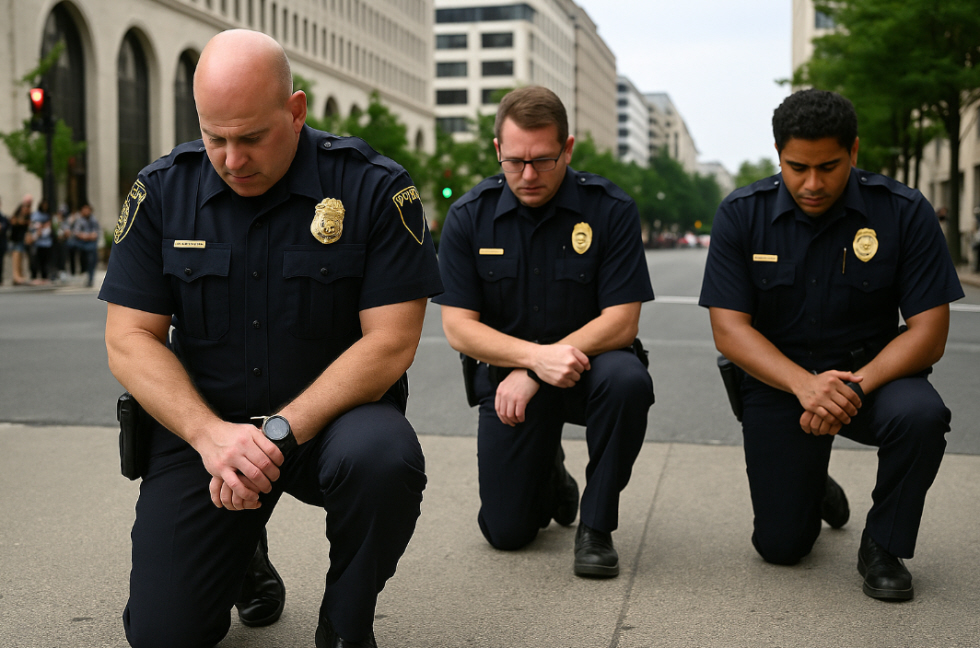
Five years after the massive protests sparked by the killing of George Floyd in Minneapolis, the issue has returned to the spotlight in the United States, this time with direct consequences inside the country’s top law enforcement agency. Several FBI agents have been dismissed after it became known that during a “Black Lives Matter” protest in Washington in 2020, they knelt in solidarity—a gesture that was widely photographed and circulated across international media and social networks.
According to Reuters and other media outlets, the dismissals affect between 15 and 22 agents, although the exact numbers have not been officially confirmed. Many of the officers had already been reassigned within the agency in 2023, but last Friday their definitive dismissal was announced as part of a broader restructuring under the FBI’s new leadership.
The decision comes after Kash Patel, a close ally of President Donald Trump, was confirmed as FBI director earlier this year with the backing of the Republican-controlled Senate. Internal sources cited by Reuters emphasized that the agents did not act with political intentions but rather attempted to de-escalate tensions in an atmosphere of intense confrontation. Nevertheless, for conservative commentators and critics of the protests, the gesture was seen as alignment with a movement that directly challenged law enforcement institutions.
The FBI Agents Association (FBIAA) immediately reacted, strongly condemning what it called the “unjustified dismissal of more than a dozen special agents,” including military veterans protected under special regulations. In a statement, the FBIAA claimed that the agents had not been granted due process and that their legal rights were violated. “Instead of guaranteeing a transparent process, Director Patel ignored the law and undermined these agents’ protections,” the association said. The case revives memories of George Floyd’s murder, which triggered a historic wave of protests against police violence and systemic racism.
Former police officer Derek Chauvin, who pressed his knee against Floyd’s neck for more than nine minutes, was sentenced to 22 and a half years in prison in 2021 and was later stabbed inside prison in late 2023. Those protests were also remembered for the controversial decision of then-President Donald Trump to clear Lafayette Square with tear gas and rubber bullets so he could pose with a Bible outside a nearby church, one of the most criticized moments of his presidency. The episode unfolds amid growing tensions within the FBI.
Earlier this month, former acting director Brian Driscoll and two other high-ranking officials filed a lawsuit against the Trump administration, alleging they were unjustly removed as part of a “campaign of retaliation” targeting officials deemed insufficiently loyal. According to Driscoll’s testimony, Patel had been ordered to fire anyone connected with criminal investigations into Trump, under the threat of losing his own position.
The situation raises a profound debate about the independence of law enforcement institutions, the enduring legacy of the Floyd protests, and the direction the current administration is taking in its relationship with security agencies in a country still deeply marked by unresolved social and racial wounds.