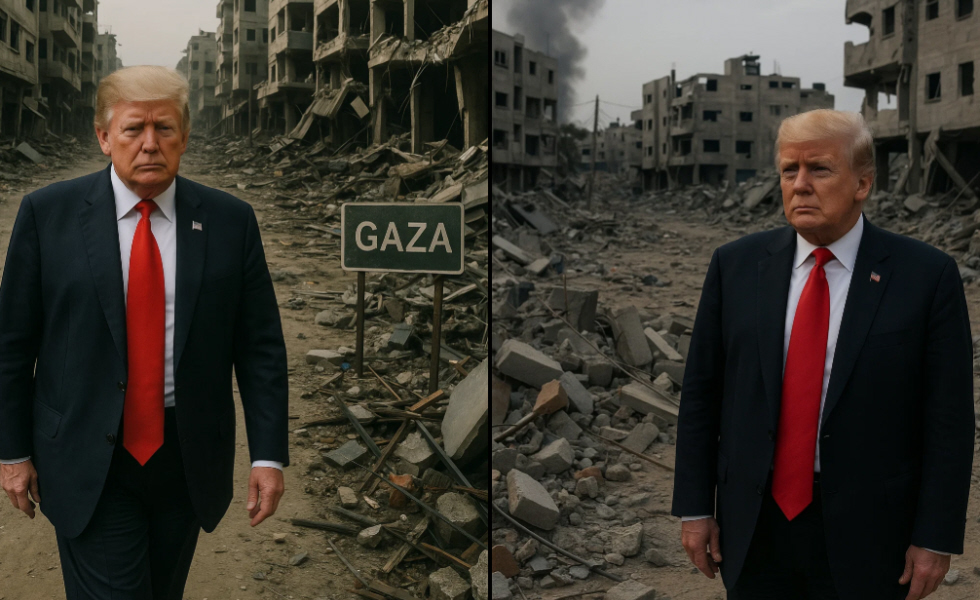
The United States appears to have ambitious plans for the Gaza Strip once the ongoing war comes to an end. According to a Washington Post report, President Donald Trump’s administration is working on a 38-page proposal envisioning nothing less than the temporary relocation of nearly two million Palestinians in order to carry out a complete reconstruction of the territory. Under this plan, Washington would assume direct control over the coastal enclave for at least ten years.
The project, called the Gaza Reconstitution, Economic Acceleration and Transformation Trust (Great Trust), aims to transform Gaza into a tourism and technology hub, described as a “Middle Eastern Riviera.” The initiative outlines the construction of data centers, electric car factories, hotels, and smart cities, financed by both public and private investment.
During the process, Gaza’s residents would be urged to leave “voluntarily” to third countries or relocate to secure areas within the Strip. Families who give up their homes would receive digital tokens that could be used to start a new life abroad or exchanged for apartments in one of six to eight newly built “smart cities.” Trump had already sparked international outrage earlier in 2024 when he announced that Gaza would be placed under U.S. control and redeveloped into a high-tech tourist destination. Arab and European states denounced the idea as neocolonial and a violation of international law. Israel, however, responded positively.
Prime Minister Benjamin Netanyahu praised the proposal, calling it an “historic opportunity” to “deradicalize” the enclave. The plan specifies that after a decade under the management of the Great Trust, Gaza would be transferred to a reformed and “deradicalized” Palestinian administration, supposedly capable of ensuring long-term stability and preventing the resurgence of groups such as Hamas.
Yet the origin of the plan is equally controversial: according to the Washington Post, it was drafted by Israelis linked to the GHF Foundation, a U.S.-backed organization that recently replaced UN agencies as the main distributor of humanitarian aid in Gaza. Since GHF assumed this role, more than 1,000 people seeking assistance have reportedly been killed near its facilities, according to UN data.
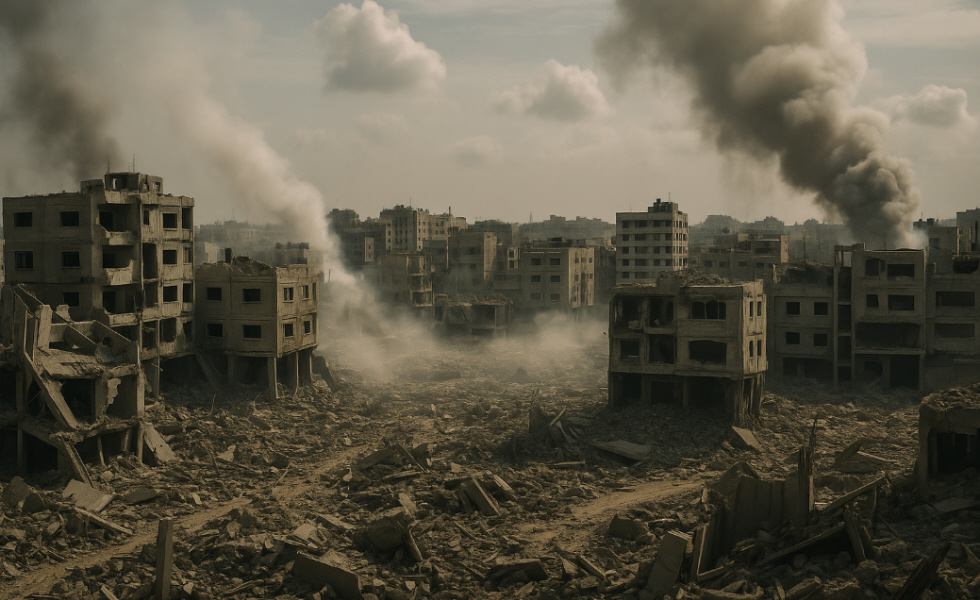
The debate over the U.S. proposal comes against the backdrop of devastating conflict. The war in Gaza began on October 7, 2023, following Hamas’s large-scale attack against Israel, which killed 1,219 people and resulted in 251 hostages taken into Gaza, according to Israeli figures. Since then, Israel has launched continuous military operations across the territory.
Hamas authorities—whose figures cannot be independently verified—claim that more than 63,400 Palestinians have died as a result of the offensive. For critics and observers, the U.S. plan is not merely a reconstruction proposal but a geopolitical redesign aimed at reshaping Gaza under terms dictated by Washington and Tel Aviv. Supporters argue it could bring modernization and stability, while opponents warn it risks erasing Gaza’s Palestinian identity and deepening divisions in the Middle East.