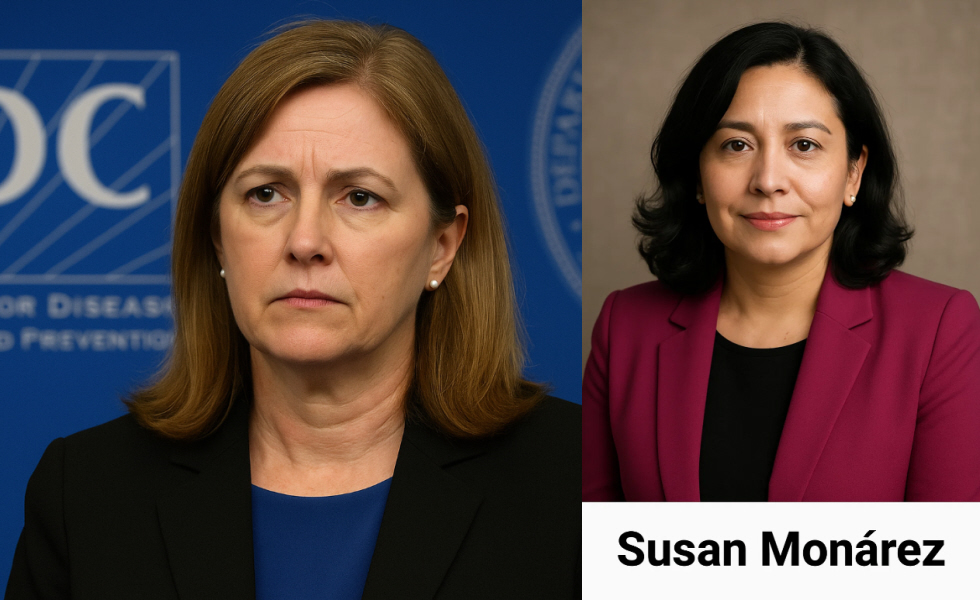
The United States is facing a new upheaval in the field of public health following the abrupt dismissal of Susan Monarez, director of the Centers for Disease Control and Prevention (CDC), just weeks after being confirmed in her position by the Senate. The forced removal of Monarez has been interpreted by her lawyers and collaborators as direct retaliation for refusing to endorse what they described as "irresponsible and unscientific directives" coming from the administration.
The case has ignited a heated debate over the growing politicization of public health in the country. According to Monarez’s legal team, the official refused to sign documents that altered scientific guidance on sensitive issues such as vaccination campaigns, medical resource distribution, and responses to health emergencies. Her refusal to bow to political pressure reportedly triggered her immediate dismissal, setting off alarm bells within the scientific community and among international organizations who are deeply concerned about the loss of independence at U.S. health agencies.
In the wake of her departure, at least three senior CDC officials — Dr. Demetre Daskalakis, Dr. Deb Houry, and Dr. Daniel Jernigan — resigned in protest. In a joint statement, they denounced a "deliberate erosion of scientific credibility" and warned that this institutional crisis undermines the agency’s ability to effectively lead in the fight against outbreaks, epidemics, and other health threats.
The loss of these key figures represents a major blow to the stability of the CDC, an institution long regarded as a global reference point in public health. The ousting of Monarez has also fueled intense political clashes. While some lawmakers aligned with the administration defended the decision, claiming it was necessary to “realign” the agency’s policies with government priorities, opposition leaders condemned the move as an unprecedented assault on scientific autonomy.
Analysts have emphasized that this episode could erode public trust in health institutions and create uncertainty at a time when the world faces challenges such as the resurgence of contagious diseases and the ongoing climate crisis. Meanwhile, numerous medical associations, universities, and civil organizations have spoken out in defense of Monarez, highlighting her impeccable professional career and her unwavering commitment to scientific evidence.
For many, her dismissal symbolizes a dangerous regression in the relationship between politics and science, raising urgent questions about how to shield public health agencies from external interference. This episode, which marks a turning point in the recent history of the CDC, not only exposes the deep tensions between science and politics in the United States but also sends a troubling message to the international community about the fragility of technical agencies in times of extreme polarization.