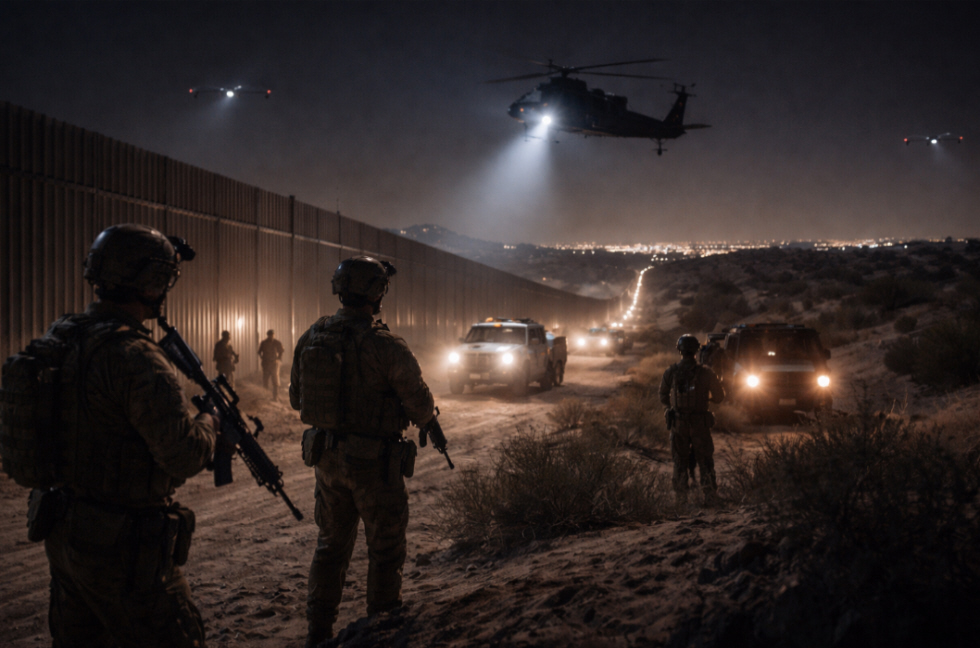
The recent statement by the President of the United States suggesting the possibility of attacking drug cartels “on the ground” has marked a turning point in regional security policy. The message was clear and public: Washington is willing to push the fight against organized crime beyond maritime and aerial operations, signaling a readiness to consider land-based actions against criminal networks viewed as a direct threat to U.S. national security.
This stance represents a significant escalation compared to previous strategies, which focused largely on maritime interdictions, aerial surveillance, financial sanctions, and bilateral cooperation. The explicit reference to ground operations introduces a new and far more complex scenario, carrying deep political, diplomatic, and military implications, particularly for allied countries where major cartels operate.
The core justification presented by the White House centers on the devastating impact of synthetic drugs, especially fentanyl, which is blamed for more than one hundred thousand overdose deaths annually in the United States. From this perspective, cartels are no longer framed solely as criminal organizations, but as transnational actors capable of inflicting harm comparable to that caused by irregular armed groups.
Within this framework, Washington has reinforced its legal and strategic narrative by equating several cartels with foreign terrorist organizations. Such a classification dramatically expands the range of tools available to the U.S. government, enabling responses typically reserved for counterterrorism operations rather than traditional law enforcement efforts. The prospect of ground operations inevitably raises sensitive questions about national sovereignty.
Any direct military action inside the territory of an allied nation would, in principle, require coordination, explicit consent, or an exceptional legal framework. Absent such conditions, the risk of severe diplomatic fallout and regional instability would be considerable. From a military standpoint, “ground action” does not necessarily imply large-scale invasions, but could involve targeted raids, limited incursions, or the deployment of special operations forces against specific objectives.
Even so, such missions carry high risks, both for the forces involved and for civilian populations living in cartel-controlled areas. Across Latin America, reactions have been marked by caution and concern. Governments in the region are closely monitoring Washington’s language, aware that a shift in doctrine could disrupt security balances that have been carefully managed for decades. Historical memories of past interventions continue to shape public and political perceptions.
Ultimately, the threat to attack cartels on the ground is more than a show of force; it signals that the United States may be reconsidering the boundaries of its war on drug trafficking. Should this rhetoric translate into concrete action, the consequences would extend beyond organized crime, potentially reshaping U.S.–Latin American relations for years to come.