The war involving Iran, the United States and Israel continues to expand across the Eastern Mediterranean as missile threats increasingly affect the wider region. In response to the growing risk posed by Iranian ballistic missiles, U.S. Navy destroyers deployed in the area have begun using some of the most advanced interceptor systems in the American arsenal.
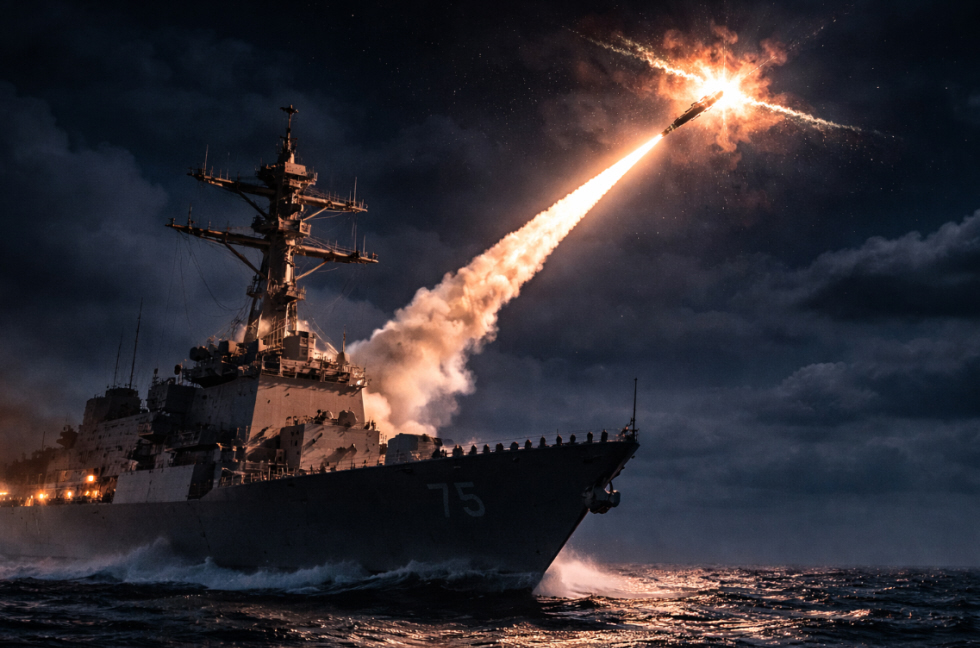
American warships equipped with the Aegis combat system have launched SM-3 Standard Missile interceptors to destroy Iranian ballistic missiles heading toward NATO airspace. The operations are part of a broader defensive effort aimed at preventing the conflict from spreading into allied territories. One of the most recent incidents involved the Arleigh Burke-class destroyer USS Oscar Austin, which fired at least one SM-3 interceptor from the Eastern Mediterranean to intercept an Iranian ballistic missile traveling toward Turkish airspace.
The interception took place at high altitude using advanced radar and sensor systems capable of tracking ballistic targets across vast distances. The Iranian missile was destroyed before it could pose a direct threat to NATO territory. Such missions highlight the strategic importance of the Aegis missile defense system and the American destroyers stationed in the region. These ships are specifically designed to detect, track and neutralize aerial threats, including long-range ballistic missiles.
The interception carried out by the USS Oscar Austin was not an isolated event. Since the beginning of military operations against Iran at the end of February, U.S. destroyers have reportedly used SM-3 interceptors multiple times to stop Iranian missile launches in the region. Each SM-3 launch represents a highly sophisticated defensive operation.
Unlike traditional missiles, the interceptor destroys its target through kinetic impact, striking the incoming missile at extremely high speeds without using an explosive warhead. Military analysts say the repeated use of this system underscores the seriousness of the conflict and the growing risk that Iranian missile attacks could reach NATO territory if not intercepted in time.
Defending Turkish airspace also reflects rising concern within the Atlantic alliance about the possibility that the war could spill beyond the current battlefield and directly involve additional countries. As tensions continue to rise, the presence of U.S. Navy destroyers in the Eastern Mediterranean has become a critical component of the broader defensive posture aimed at containing the conflict and protecting allied airspace.