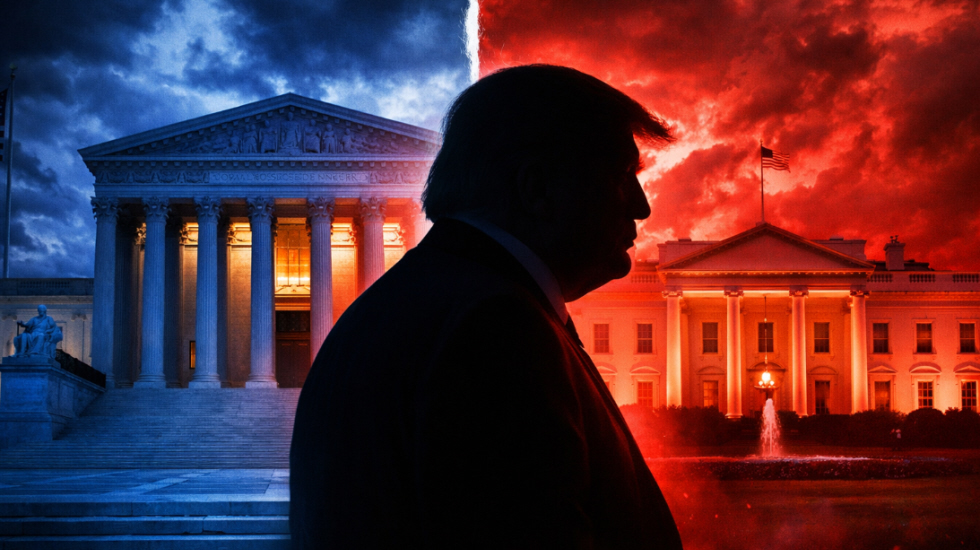
The Supreme Court of the United States heard arguments this Wednesday regarding the attempt to limit birthright citizenship, in a case that could redefine one of the nation’s constitutional pillars. The hearing took place under intense political and legal attention, marking a critical moment in the broader debate over immigration and fundamental rights. For more than two hours, both sides presented their positions before a court fully aware of the historical weight of its potential ruling.
The case centers on the interpretation of the Fourteenth Amendment and its application in today’s context. The government defended its position by arguing that birthright citizenship should not automatically apply to all individuals born on U.S. soil, particularly in cases involving irregular immigration status. According to its legal team, the traditional interpretation has been overly broad and requires reconsideration in light of modern challenges. This argument seeks to introduce a significant shift in how constitutional jurisdiction over citizenship is understood. However, it faces strong historical and legal resistance.
Opponents of the measure argued that birthright citizenship is clearly protected by the Constitution and reinforced by decades of judicial precedent. They emphasized that any attempt to restrict this right would represent a fundamental break with established legal principles. Furthermore, they warned that altering this interpretation could create widespread legal uncertainty and affect millions of people. The debate highlighted a deep conflict between constitutional interpretation and public policy.
During the hearing, the justices posed questions to both sides, examining the limits of the constitutional text and its practical implications. This exchange reflected the complexity of the case and the need for careful evaluation of each argument presented. However, there were no clear indications of a dominant position within the Court. The dynamic suggested a rigorous analysis rather than a clear leaning toward one side. One of the most significant aspects of the debate was the tension between an originalist interpretation of the Constitution and a more evolving view of its principles.
This divide has historically shaped many of the Court’s decisions and is once again central to this case. While some arguments rely on the original meaning of the text, others stress the need to adapt to societal changes. This clash of perspectives lies at the heart of the issue now before the Court. The presence of Donald Trump added a notable political dimension to the hearing, though it had no direct impact on the judicial process. His attendance underscored the importance the administration places on the issue and increased public visibility around the case.
Nevertheless, the Court operates independently from any political figure present in the room. Its deliberations remain grounded strictly in constitutional law. From an institutional standpoint, the case represents another chapter in the ongoing relationship between the executive and judicial branches. The administration’s initiative tests the limits of presidential authority in relation to constitutionally protected rights. While such confrontations are not uncommon in U.S. history, few carry this level of potential impact.
The ruling could redefine the balance of power between branches of government. The broader implications of the case extend deeply into American society, particularly in the context of immigration policy. Restricting birthright citizenship would represent a structural shift in the legal composition of the population. Experts warn that such a decision could trigger new legal disputes and administrative challenges. Its consequences would go far beyond the courtroom, directly affecting entire communities.
Politically, the case has become a focal point in the national debate, reflecting deep divisions within American society. For some, it represents a necessary correction of the system; for others, a threat to fundamental rights. This polarization is further intensified by the electoral climate and heightened media attention. The Court now stands at the center of a discussion that transcends legal boundaries. Major media outlets have approached the case with caution, emphasizing the importance of the hearing without projecting conclusions.
This approach reflects the uncertainty surrounding the case and the difficulty of predicting the final decision. Coverage remains fact-based and measured. From a legal perspective, the Court’s eventual ruling could become one of the most significant decisions in recent decades. The interpretation of the Fourteenth Amendment has long been a cornerstone of the U.S. constitutional system.
Altering it would not only change legal doctrine but also reshape the country’s rights framework. For this reason, the case is being closely watched both domestically and internationally. A decision is expected in the coming months, likely toward the end of the Court’s term. Until then, the case will continue to generate analysis, debate, and anticipation across multiple sectors. The Court now faces the responsibility of defining the scope of a fundamental right in a changing world. What is at stake is not only a policy issue, but the very interpretation of America’s constitutional identity.