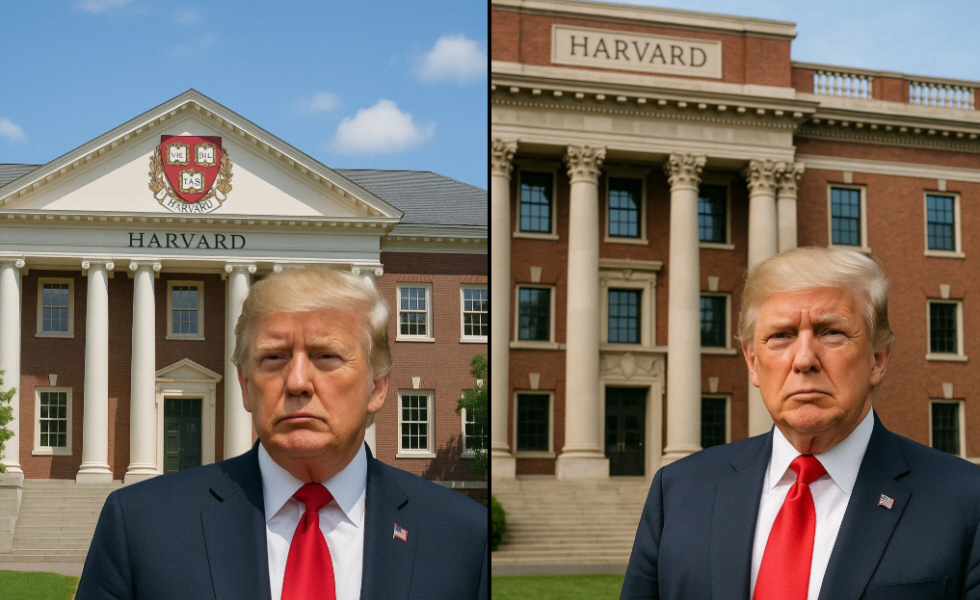
Harvard University scored a significant legal victory over former President Donald Trump after a federal court ruled that his administration’s decision to freeze more than $2 billion in research funding was unconstitutional.
The ruling, issued by Judge Allison Burroughs, concluded that the move violated the First Amendment, the Civil Rights Act’s Title VI, and the Administrative Procedure Act. According to the court, the Trump administration’s actions were not genuinely motivated by concerns about antisemitism on campus, as publicly claimed, but rather represented a politically driven effort to punish one of the nation’s most influential academic institutions.
The case originated when the Trump administration accused Harvard of failing to provide a safe environment for Jewish students and used that argument to block federal research grants. However, judicial findings showed that the government was in fact conditioning access to funding on changes to admissions, hiring, and governance policies—an overreach deemed both arbitrary and unconstitutional.
Judge Burroughs determined that such measures endangered academic freedom and institutional autonomy, setting a dangerous precedent if allowed to stand. With the decision, not only were Harvard’s research funds restored, but the court also issued a permanent injunction prohibiting similar restrictions from being imposed in the future under the same rationale. This landmark ruling thus establishes legal protection for other universities that may face similar political pressures.
For Harvard, the restored funds represent vital resources for ongoing projects in medical research, scientific innovation, and technology development, all of which had been placed at risk. The Trump camp quickly responded, announcing plans to appeal the ruling. White House officials reiterated their position that Harvard has not done enough to address antisemitism on campus and argued that taxpayer money should not go to an institution they claim ignores the safety of Jewish students.
Critics aligned with Trump framed the court’s decision as favoritism toward elite universities disconnected from ordinary Americans, while Harvard supporters hailed it as a resounding defense of academic freedom.
The outcome has reignited debate in the United States over the relationship between government oversight and higher education. While some see the ruling as a necessary safeguard against political interference, others fear it downplays legitimate concerns about discrimination in academia.
In any case, the clash underscores how research funding, civil rights, and ideological battles are increasingly intertwined in American politics, with Harvard and Trump once again at the center of a national controversy.