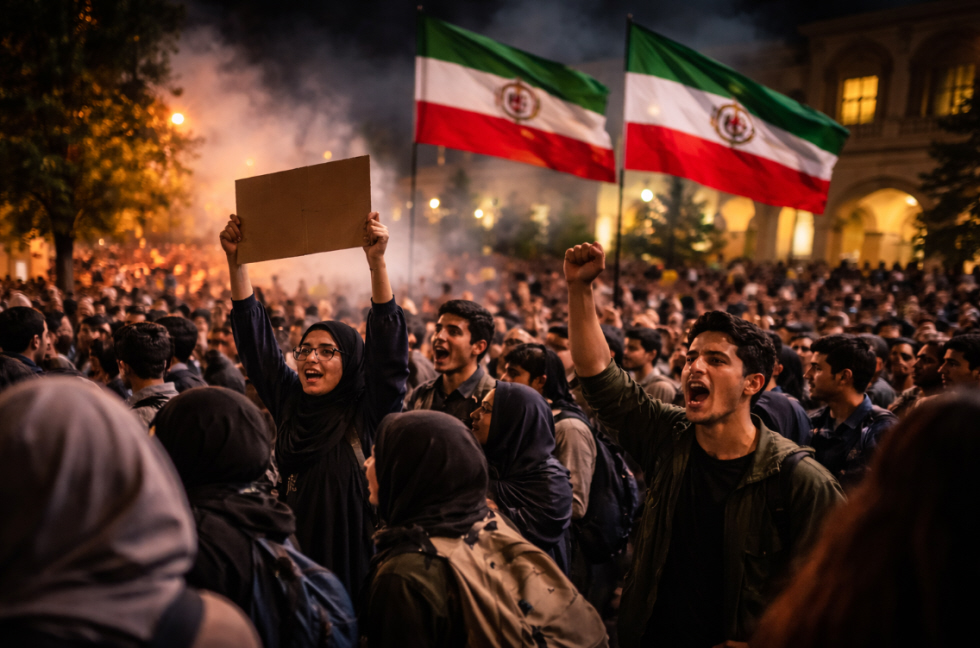
Following renewed demonstrations at Iranian universities, the government in Tehran has issued its first official response, adopting a dual tone that combines acknowledgment with warning. Authorities stated that students have the right to protest, but emphasized that certain “red lines” must not be crossed. Government spokesperson Fatemeh Mohajerani pointed to national symbols such as religious shrines and the flag as examples of boundaries that the state considers non-negotiable.
Even in moments of heightened anger, she said, these values must remain protected and respected. The protests took place at the start of the new academic semester, a period that has historically carried political sensitivity in Iran. Universities have long served as centers of debate, activism, and social mobilization within the country. Mohajerani acknowledged that many students carry what she described as “wounds in their hearts,” suggesting that the unrest is rooted in recent events that have caused frustration and emotional strain among young people.
At the same time, the government made clear that demonstrations crossing symbolic or religious limits could face consequences. The message reflects the delicate balance Tehran seeks to maintain between allowing limited public expression and preserving institutional stability. The partial recognition of students’ right to protest may be interpreted as an attempt to ease tensions without relinquishing political control.
The language used by officials appeared more measured than in previous periods of unrest. However, the repeated reference to “red lines” underscores that tolerance remains conditional. In the Iranian political framework, the protection of national and religious symbols is closely tied to the legitimacy of the governing system.
The coming weeks will be critical in determining whether authorities pursue a strategy of moderated containment or move toward stricter enforcement. Developments within university campuses often serve as early indicators of broader social dynamics across the country.