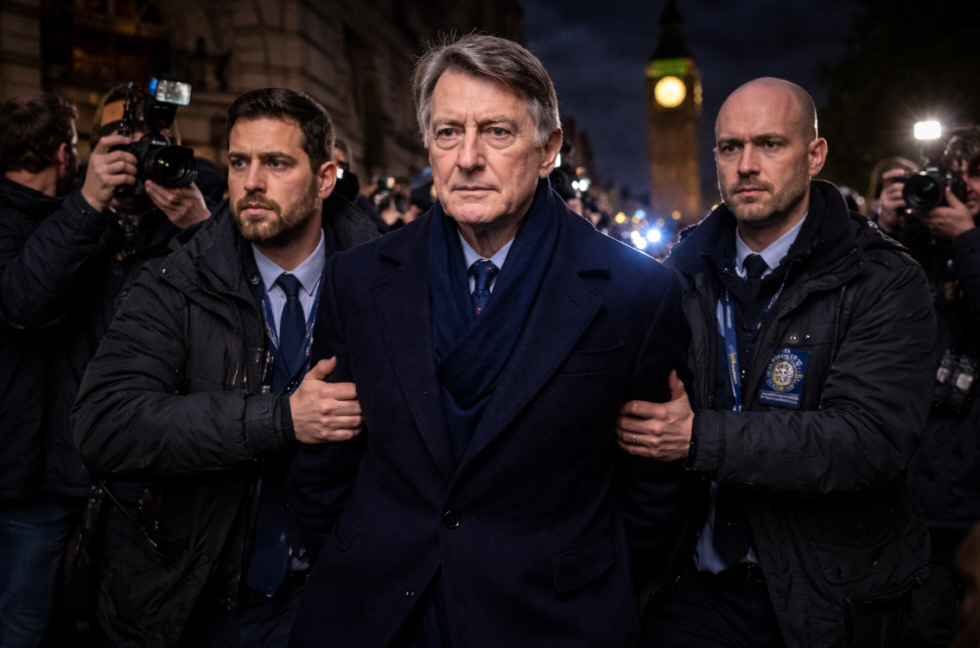
Former British ambassador to the United States Peter Mandelson was briefly arrested in London as part of an ongoing investigation linked to his past contacts with Jeffrey Epstein. Plainclothes officers escorted him from his residence in Camden, drawing renewed attention to high-profile figures associated with the late financier. Authorities confirmed that Mandelson was questioned under suspicion of potential misconduct in public office.
After several hours of interrogation, he was released on bail while the investigation continues, signaling that the case remains in its preliminary stages. The arrest comes only days after Prince Andrew faced legal scrutiny in connection with the broader Epstein network. The rapid succession of developments has intensified public reaction in the United Kingdom, as prominent members of the political and social establishment find themselves under examination. Investigators are reportedly assessing whether Mandelson may have shared sensitive information or maintained contacts that could have conflicted with his official responsibilities.
No formal charges have been filed, and the former diplomat has denied any wrongdoing. Mandelson, a longtime figure within the Labour Party, previously held senior cabinet positions before serving as ambassador to Washington. His political career has spanned decades and has included periods of controversy as well as significant influence within British governance. Members of his legal team have described the arrest as disproportionate and based on unfounded assumptions.
They maintain that he has fully cooperated with authorities and remains confident that the investigation will ultimately clarify the circumstances. The case once again highlights the enduring international ramifications of the Epstein scandal. Years after his death, questions continue to surface regarding the network of influential individuals who maintained associations with him.
Politically, the arrest has increased pressure on British institutions to demonstrate transparency and procedural integrity. Public scrutiny remains high, particularly when investigations involve individuals who have held positions of public trust. Analysts suggest that beyond individual accountability, the episode underscores how reputational risks can quickly escalate for members of elite circles when legal inquiries emerge.
The manner in which the investigation is handled may prove crucial in maintaining institutional credibility. For now, Mandelson’s legal future will depend on the progression of the inquiry. As developments unfold, the situation adds another chapter to a series of events that continue to reverberate through British political life.