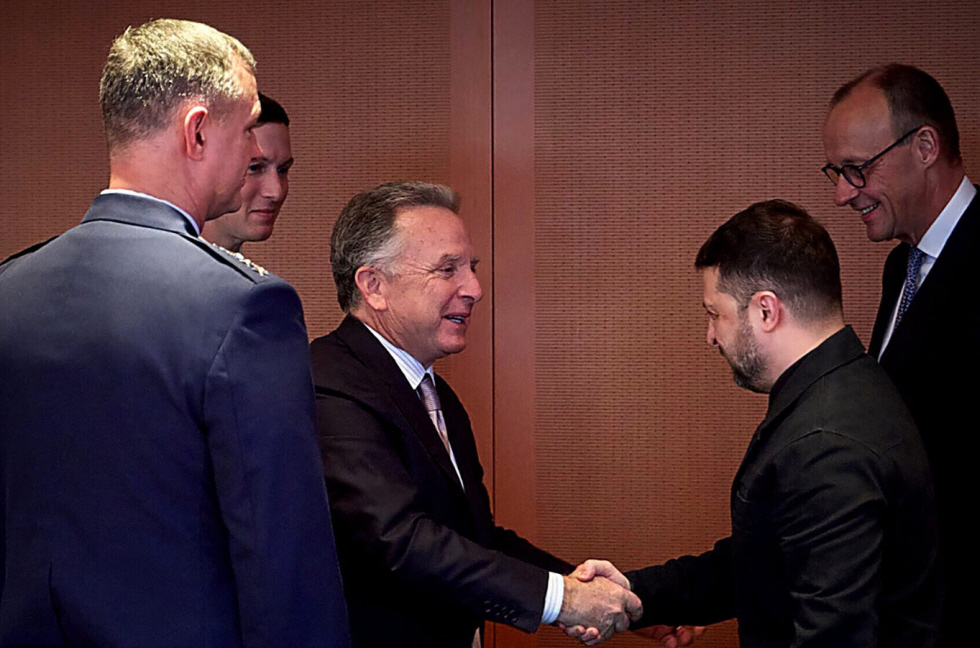
According to a Ukrainian government official, U.S. negotiators in the peace talks have continued to press for concessions in the Donbas region, even though the area is not fully occupied by Russia. Kyiv reported “real progress” in its talks with the United States as diplomatic efforts continued in Berlin. On Monday, German Chancellor Friedrich Merz and Ukrainian President Volodymyr Zelensky are scheduled to speak at the German-Ukrainian Economic Forum before holding a bilateral meeting at the Chancellery, followed in the evening by further talks with several European heads of state and government, as well as leaders of the European Union and NATO.
On Sunday, U.S. envoys Steve Witkoff and Jared Kushner held hours-long negotiations with Zelensky. While Witkoff later spoke of major breakthroughs, other sources familiar with the talks urged caution. The central issue remains the security guarantees Ukraine would receive. Ukraine’s chief negotiator, Rustem Umerov, described the Berlin talks as “constructive and productive” and denied reports that Kyiv had abandoned its aspiration to join NATO. U.S. officials have yet to specify what security guarantees Washington is prepared to offer, while Russia continues to frame Ukraine’s renunciation of NATO membership as a fundamental condition for any peace agreement.
At the same time, European leaders are seeking to prevent what they describe as a “dictated peace” and plan to clear the way at the upcoming EU summit for the use of more than €200 billion in frozen Russian state assets to finance Ukraine’s defense over the next two to three years. The move is opposed by both Moscow and Washington and has already prompted a lawsuit by Russia’s central bank. Meanwhile, a survey by the Kyiv International Institute of Sociology shows that a large majority of Ukrainians reject Russia’s conditions, particularly territorial concessions, the abandonment of security guarantees, and limits on Ukraine’s armed forces. While 72 percent could envision recognizing the current front line as a border, 63 percent are willing to continue fighting, underscoring widespread skepticism that the war will end soon.