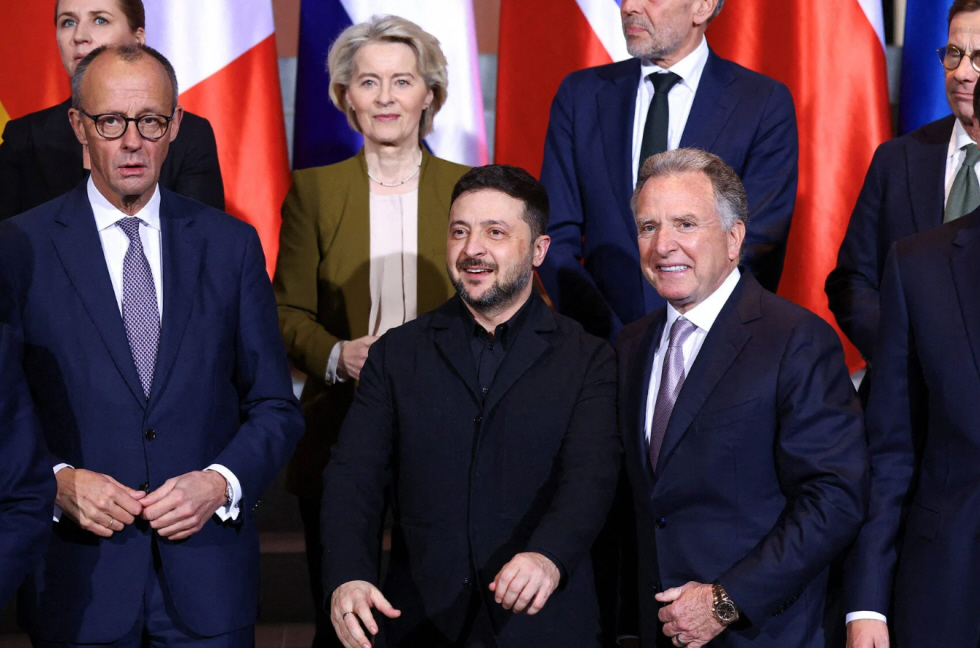
During peace talks held in Berlin, Ukrainian and U.S. negotiators reported significant progress and indicated that Russia has signaled openness to Ukraine’s future accession to the European Union as part of a possible agreement to end the war. The meetings involve Ukrainian President Volodymyr Zelensky, U.S. envoys Steve Witkoff and Jared Kushner, as well as European leaders.
While Witkoff spoke of major breakthroughs, other sources familiar with the negotiations were more cautious in assessing how close the talks are to a concrete agreement. Ukraine’s chief negotiator, Rustem Umerov, said the discussions have been “constructive and productive” and expressed hope that an agreement could be reached by the end of the day. U.S. officials later confirmed that Moscow had indicated willingness to accept Ukraine’s EU membership, a sensitive issue in the conflict, although they noted that Russia has repeatedly put forward conditions previously deemed unacceptable by Kyiv.
At the same time, German Chancellor Friedrich Merz urged the European Union to decide at its upcoming summit on the release of frozen Russian assets to support Ukraine, warning that the bloc’s credibility and ability to act were at stake. In the final stage of the talks, European leaders proposed the deployment of a “multinational force for Ukraine” as a security guarantee, led by European countries and supported by the United States, aimed at strengthening Ukraine’s armed forces, securing its airspace, and improving maritime safety.
Both U.S. and European leaders reaffirmed their commitment to providing Ukraine with strong security guarantees and economic reconstruction support as part of a peace deal. Speaking at the White House, U.S. President Donald Trump said that an agreement to end the war is now closer than ever.