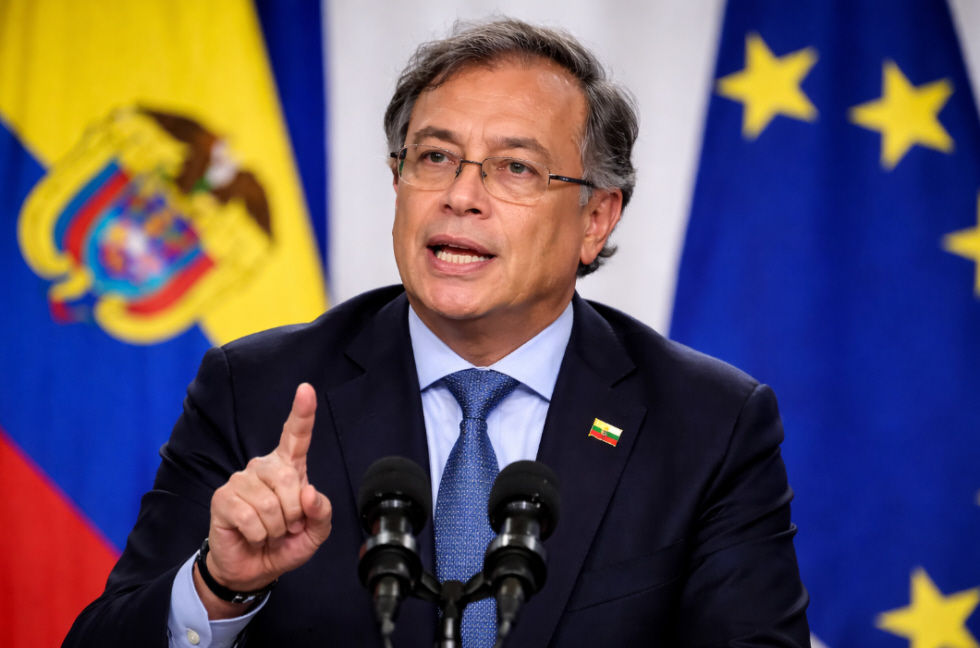
Colombian President Gustavo Petro stated that former Venezuelan leader Nicolás Maduro should be returned to Venezuela to face trial in his own country. The remarks generated immediate regional attention, though without producing any tangible impact where key decisions are actually made. Petro’s position fits within his recurring narrative centered on sovereignty and self-determination, themes he frequently emphasizes in international discourse.
However, such statements carry limited practical weight when they confront legal and political systems beyond his reach. In concrete terms, the Colombian president’s opinion has no binding effect on legal proceedings taking place outside his jurisdiction. Decisions in cases of this scale are governed by domestic legal frameworks and strategic interests defined by the states involved. The United States, in particular, does not adjust its judicial or diplomatic actions based on declarations from foreign leaders lacking direct leverage. In this context, Petro’s call is viewed more as a political gesture than a realistic proposal.
The distinction between expressing an opinion and exercising real influence is central to understanding the scope of the statement. While some international actors possess effective tools of pressure, others remain confined to symbolic positioning. Modern international politics is shaped by power balances, strategic alliances, and institutional decision-making, not by isolated declarations.
Within that landscape, Colombia does not currently hold a position capable of altering high-level judicial processes. Petro’s message appears aimed at reinforcing his political identity within the region and signaling ideological distance from certain global powers, rather than prompting any concrete shift in the case itself.
As a result, the statement remains firmly in the realm of rhetoric. On the international stage, voicing an opinion does not equate to making decisions, and in this case, those decisions continue to be made far from Bogotá.