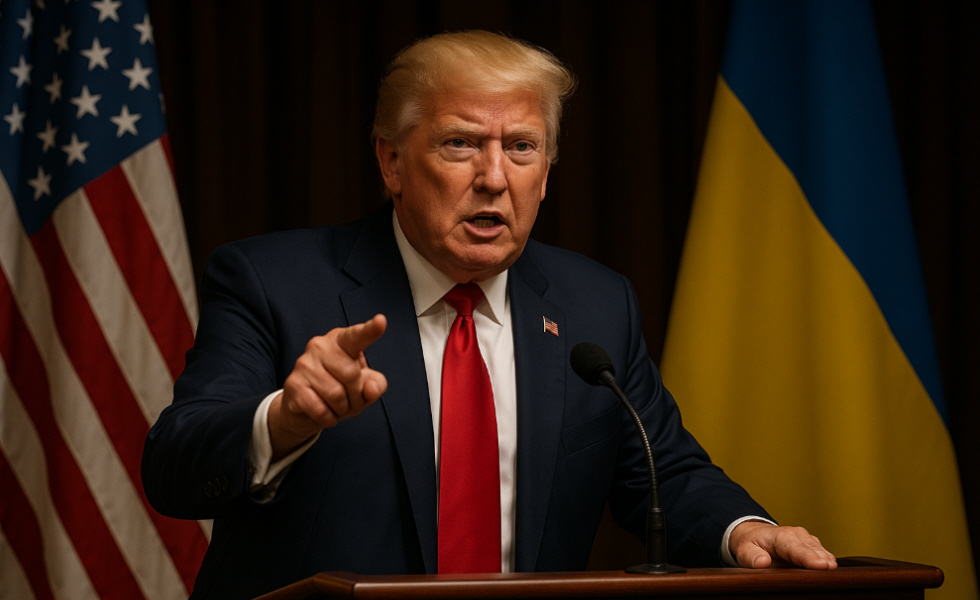
During a series of statements made between July 28 and 31, Trump drastically shortened the previously announced deadline—from 50 days to just 10 to 12 days—and warned that Moscow now has only that short period to reach a ceasefire. If the deadline is not met, the United States will impose extremely harsh economic sanctions, including 100% tariffs and secondary measures against countries that maintain trade relations with Russia.
The new deadline imposed by Trump expires around August 7 or 8, 2025, and represents the strongest stance taken so far by the Republican politician regarding the conflict that has bled Ukraine since 2022. Trump firmly declared: "There is no reason to wait... We see no progress. The attacks continue and civilians keep dying. Enough is enough." This statement was made while he was in Scotland and later reiterated at an official press conference in Washington.
Reactions from Moscow came quickly. Dmitry Medvedev, former Russian president and current deputy chairman of Russia’s Security Council, called Trump’s ultimatum “a theatrical show for the cameras” and warned that such pressure could lead to a direct war between Russia and the United States. Medvedev went even further by referencing the Soviet nuclear response system “Dead Hand,” implying that any action against Russia could have catastrophic consequences.
Trump, for his part, did not remain silent and immediately responded: "Medvedev is a failed president. He’d better watch his words." He added that the United States “does not need to trade with Russia to prosper” and that he is willing to go “all the way” if Moscow ignores the new deadline. The diplomatic tension coincides with a new wave of Russian attacks on Ukrainian territory. In just the past week, over 300 drones and missiles were launched at Kyiv, Odesa, and other major cities.
The deadliest bombing killed at least 31 people, including five children, and injured more than 150. Trump described these attacks as “disgusting” and reaffirmed that if there is no immediate progress toward peace, the United States will not only punish Russia with unprecedented sanctions, but will also pressure its international partners to take joint action. Ukrainian President Volodymyr Zelenskyy publicly thanked the former U.S. president, stating that only through international pressure can Putin be forced to cease fire. Meanwhile, U.S. Special Envoy Steve Witkoff was appointed to travel to Moscow in an attempt to mediate before the deadline expires.
However, diplomatic sources indicated that so far there have been no signs of openness from the Kremlin. In Europe, the international community remains divided. Some governments, especially in Eastern Europe, applaud Trump’s firmness. Others, however, fear that the hardening tone may escalate the conflict. Groups like Weimar+, an alliance of European countries in favor of negotiation, have demanded that any peace process include Ukraine’s direct participation and be built on principles of justice and reparation. With an increasingly tense scenario and the deadline rapidly approaching, the entire world is watching closely to see whether Trump’s strategy will succeed in ending the most devastating conflict in Europe since World War II—or whether we are heading toward an even more dangerous phase of global confrontation.