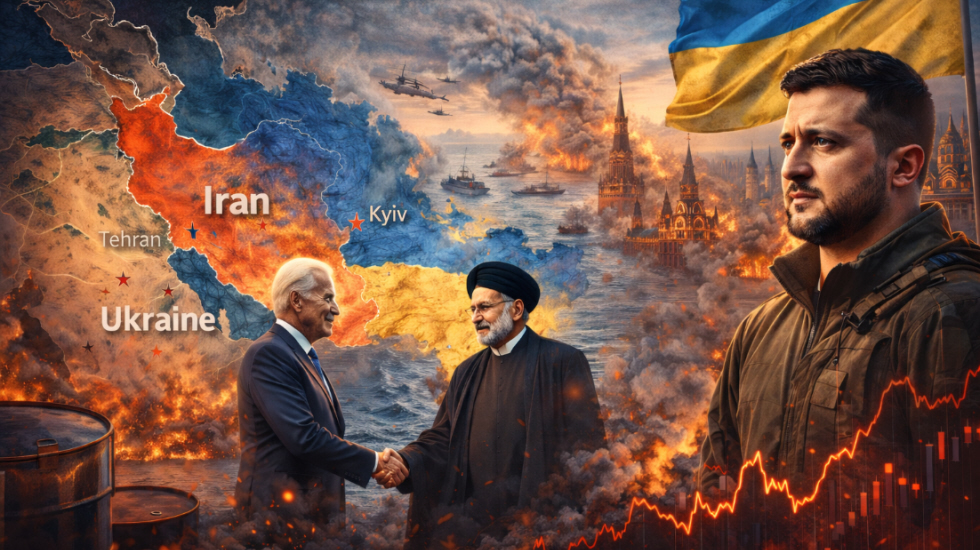
The recent two-week ceasefire agreement between the United States and Iran has generated a wave of positive reactions across the international stage. Although temporary, the truce is being interpreted as a potential first step toward broader de-escalation. In a world marked by multiple ongoing conflicts, any sign of stability carries immediate weight. Global attention is beginning to shift toward other active fronts. In this new context, Ukraine has moved to reposition its conflict within the global agenda.
President Volodymyr Zelensky has reiterated his willingness to pursue a ceasefire with Russia. His message seeks to take advantage of the diplomatic momentum created by developments in the Middle East. The strategy aims to reopen a window for negotiation. Zelensky stated that Ukraine is ready to respond “in mirror form” if Russia halts its attacks. This approach suggests direct reciprocity as the foundation for any potential progress. While the proposal is not new, it gains renewed relevance under current circumstances. The possibility of reducing hostilities is once again on the table.
The Ukrainian leader believes that a ceasefire could create favorable conditions for broader negotiations. The priority remains lowering the intensity of the conflict and moving toward a political solution. However, the success of this initiative depends heavily on Moscow’s response. The balance remains highly fragile. The truce between the United States and Iran has been viewed by several actors as an example that de-escalation is possible. While the contexts differ, the symbolic impact is significant. Diplomacy is once again taking a central role in global affairs. This shift opens new possibilities for conflict resolution.
At the same time, Russia has shown interest in the potential resumption of wider international discussions. Renewed dialogue regarding Ukraine could gain momentum in this evolving environment. However, deep divisions between the parties remain unresolved. The path toward an agreement continues to be complex. The war in Ukraine continues to have a significant impact on global stability. Issues such as energy security, trade, and geopolitical alignment remain closely tied to its outcome.
As a result, any ceasefire initiative is closely monitored worldwide. The conflict remains a central pillar of international dynamics. Analysts suggest that the current moment may represent a limited but important opportunity. Global dynamics are constantly shifting, and openings for negotiation can emerge unexpectedly. However, political will remains the decisive factor. Without it, any progress is likely to be short-lived.
Meanwhile, the international community continues to promote efforts aimed at reducing tensions across multiple fronts. The coexistence of simultaneous conflicts requires coordinated responses. Global stability depends on the ability of key actors to contain crises. The challenge lies in maintaining equilibrium.
Looking ahead, the evolution of these developments will shape international politics in the coming months. The potential for diplomatic progress will depend on key decisions across different regions. Ukraine is attempting to seize the moment, while the world watches cautiously. The opportunity exists, but the outcome remains uncertain.