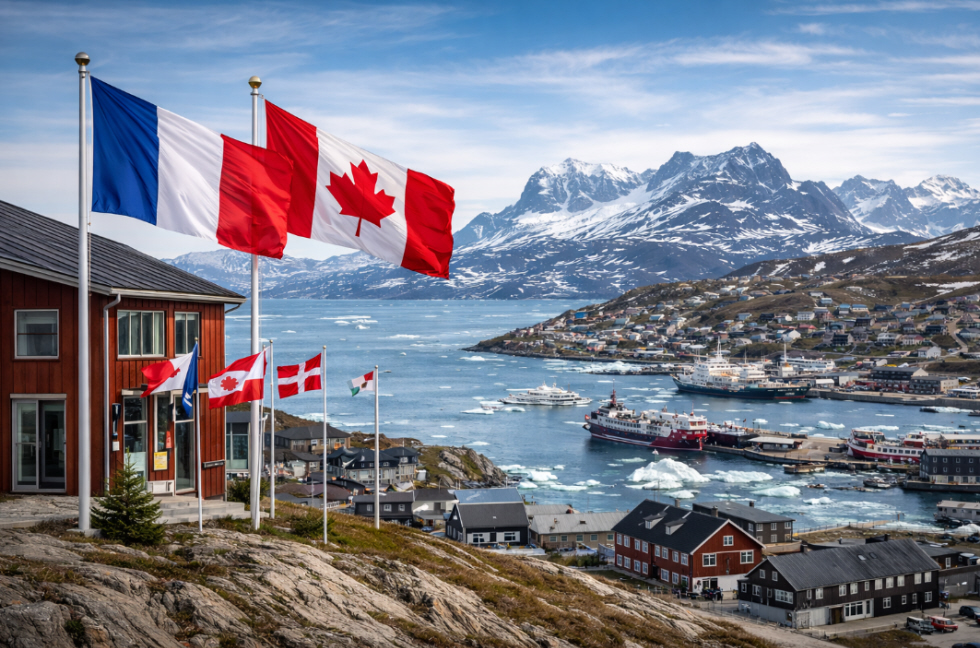
France and Canada have strengthened their diplomatic presence in Greenland in a move that has drawn international attention, particularly amid past statements by U.S. President Donald Trump regarding the Arctic island. The opening of new missions in Nuuk signals a clear political message in a territory of growing strategic importance. France will become the first European Union country to establish a consulate general in Greenland, a step Paris views as strategically significant given the rising global interest in the region. The decision was confirmed by the French Foreign Ministry and follows a policy outlined well in advance.
France’s new consul general, Jean-Noël Poirier, emphasized that the mission’s main priority will be to understand the perspectives and aspirations of Greenland’s population. He noted that France aims to be present and ready to support local actors, provided there is mutual willingness from both Greenland and Denmark. From Paris, officials have made clear that the consulate’s opening is not merely an administrative move, but a political one. France considers a direct presence essential in a territory that has shifted from the geopolitical periphery to the center of international strategic discussions. The French foreign minister previously described the initiative as a clear signal of commitment to Greenland and to stability in the Arctic.
President Emmanuel Macron had already announced the plan during an official visit to the island last summer. Canada has also moved forward with plans to open a diplomatic mission in Nuuk, though Ottawa stressed that the idea had been under consideration since 2024, well before the current tensions surrounding Greenland intensified. Canada has maintained a lower profile, but its intentions remain firm. Canada’s interest reflects broader Arctic priorities, including security, trade routes, and access to natural resources. Greenland’s location makes it a strategic bridge between North America and Europe.
The increased European and Canadian diplomatic presence comes against the backdrop of past remarks by Donald Trump, who at times suggested the possibility of taking control of Greenland, even raising the prospect of military force. Although those statements never translated into action, they left a lasting impact on international diplomacy. For Denmark, which retains sovereignty over the autonomous island, the growing attention from foreign powers requires a careful balance between diplomatic openness and territorial integrity.
At the same time, Nuuk is gaining greater international visibility and influence. Overall, the opening of new diplomatic missions in Greenland reflects a broader shift in global priorities, as the Arctic emerges as a central arena for strategic, political, and diplomatic competition in the twenty-first century.