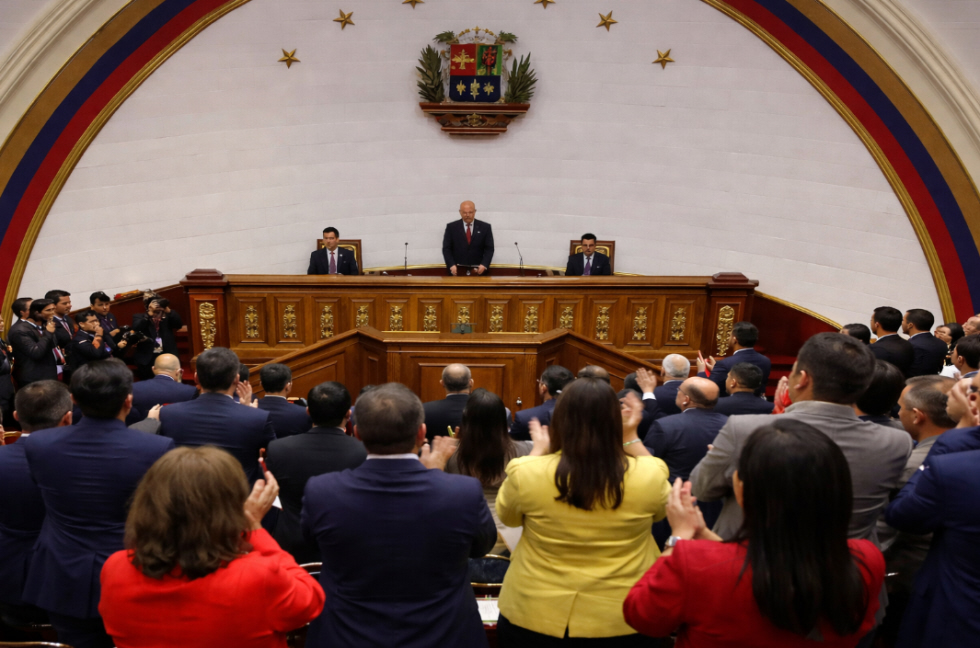
Venezuela’s National Assembly approved an amnesty law aimed at freeing all political prisoners, a move described by lawmakers as a potential turning point for the South American country after years of political and social confrontation. The bill was unanimously approved in a first parliamentary reading. The so-called Amnesty Law for Democratic Coexistence seeks to bring an end to judicial proceedings against individuals charged with politically motivated offenses.
These include accusations such as terrorism, treason, and incitement to hatred, charges that were widely used against opposition figures and protesters. During the parliamentary debate, Assembly President Jorge Rodríguez defended the initiative as a necessary step toward national reconciliation. “We ask for forgiveness, and we must also forgive,” he said, emphasizing the need to heal long-standing divisions and rebuild political coexistence.
The law is expected to benefit individuals detained or prosecuted during the governments of Nicolás Maduro and his predecessor Hugo Chávez, who died in 2013. Under the amnesty, ongoing cases would be dismissed, clearing the way for the immediate release of those imprisoned for political reasons. Opposition groups welcomed the initial approval with cautious hope. Several opposition leaders said the measure could signal the beginning of a new phase defined by institutional respect, political tolerance, and social peace.
Opposition lawmaker Tomás Guanipa described the vote as a historic moment, suggesting that Venezuela could finally begin to move beyond more than two decades of deep polarization. In his view, the amnesty offers a chance to rebuild trust across the political spectrum. The law’s approval comes amid significant political change following the end of chavismo’s 27-year grip on power.
The evolving landscape has reignited debates about justice, reconciliation, and the country’s institutional future. Although the bill must still complete additional legislative steps before becoming law, its initial passage sends a strong political signal. For many Venezuelans, the amnesty could represent the first concrete step toward democratic coexistence and lasting stability.