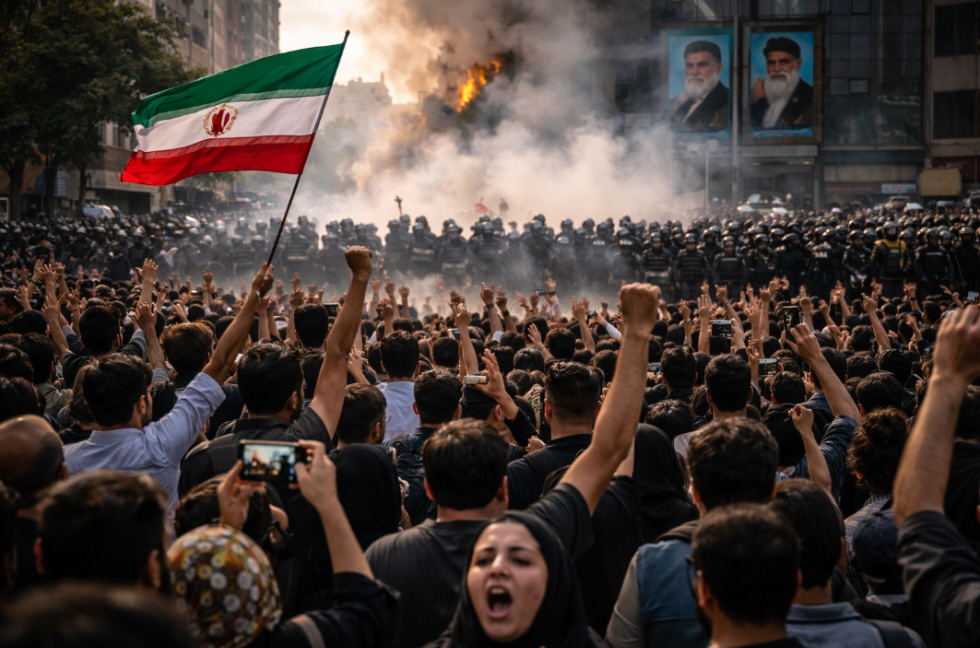
Mass protests erupted across several Iranian cities amid a deepening economic crisis, with demonstrators chanting slogans such as “death to the dictator” against the ruling regime. Public anger has intensified due to soaring living costs, declining purchasing power, and the rapid collapse of the national currency, pushing large numbers of citizens into the streets. In Tehran, security forces used tear gas to disperse protesters as shops shuttered across the Grand Bazaar and other major markets.
The closure of these influential commercial hubs was widely seen as a powerful sign of widespread dissatisfaction and growing unrest within the capital. The demonstrations quickly spread beyond Tehran. University students issued public calls urging their peers to join the protests, turning campuses into centers of mobilization. In several cities, residents reported hearing chants echoing from rooftops late at night, a protest tactic that has resurfaced during periods of heightened repression.
Economic pressure intensified further as the Iranian rial plunged to record lows against major foreign currencies. The sharp depreciation has fueled fears of runaway inflation and deepened uncertainty among a population already strained by international sanctions and long-standing economic mismanagement. Residents in areas surrounding Tehran described a heavy presence of armed security forces, many deployed on motorcycles to patrol neighborhoods throughout the night. In the city of Malard, approximately 28 miles east of the capital, witnesses reported visible concentrations of security units positioned to deter additional gatherings.
The protests are unfolding against a backdrop of heightened regional tensions, including ongoing threats from Israel and the United States toward Iran. For many demonstrators, the convergence of external pressure and internal economic collapse has exposed the regime’s vulnerabilities, while authorities continue to rely on force to contain an expanding wave of public dissent.