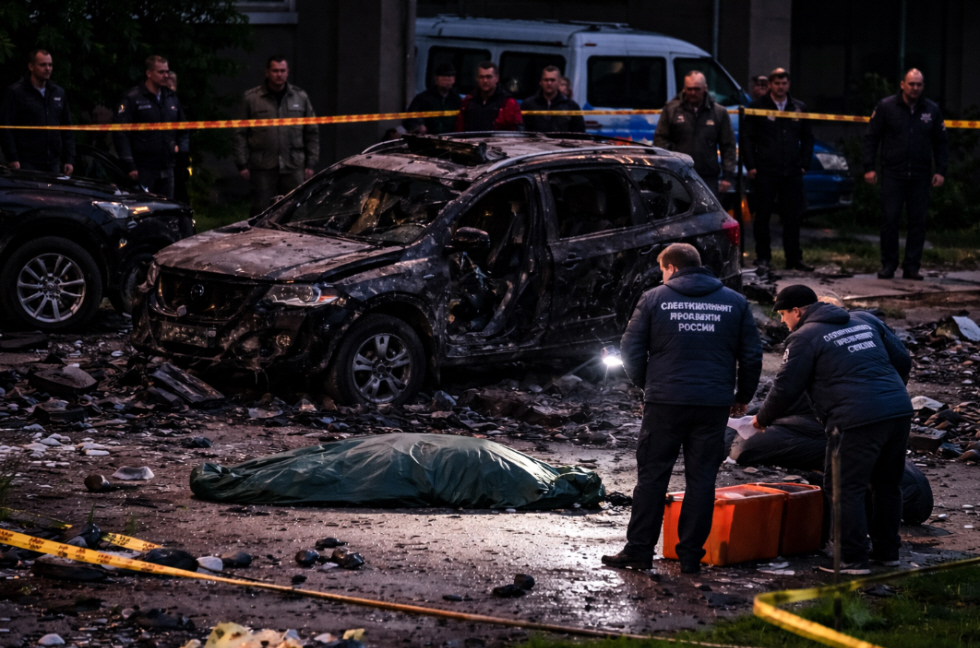
A powerful explosion in Moscow has killed another senior Russian military officer, intensifying concerns over internal security amid the ongoing war in Ukraine. The victim was identified as Lieutenant General Fanil Sarvarov, who died after a bomb detonated beneath his vehicle in a residential area of the Russian capital. Authorities confirmed that the blast caused severe injuries, and the general later succumbed despite emergency medical treatment.
The explosion occurred shortly after Sarvarov entered his car, turning what appeared to be a routine morning into a fatal attack. The scene was quickly sealed off as investigators and forensic teams examined the damaged vehicle and surrounding area for evidence. The incident has drawn widespread attention in Moscow, given the rank of the officer and the location of the attack within the city. Russian investigators have opened a criminal case and are considering several possible scenarios.
Among the lines of inquiry is the potential involvement of Ukrainian special services, although no definitive conclusions have been announced. Officials stressed that the investigation remains ongoing and that no formal claim of responsibility has been made. The killing of Sarvarov adds to a growing list of high-ranking Russian military figures who have died in targeted attacks since the launch of the invasion of Ukraine. Previous incidents involving car bombs and other explosive devices have raised alarms about the vulnerability of senior personnel, even far from active combat zones.
The pattern has fueled debate over intelligence failures and security gaps within Russia. Sarvarov was regarded as a key figure within the Russian armed forces, playing an important role in operational training and military planning. His death is likely to have repercussions beyond the immediate investigation, affecting morale within the military and reinforcing the sense that the conflict’s consequences are increasingly being felt inside Russia itself. The attack underscores how the war continues to reshape the security landscape far from the front lines.