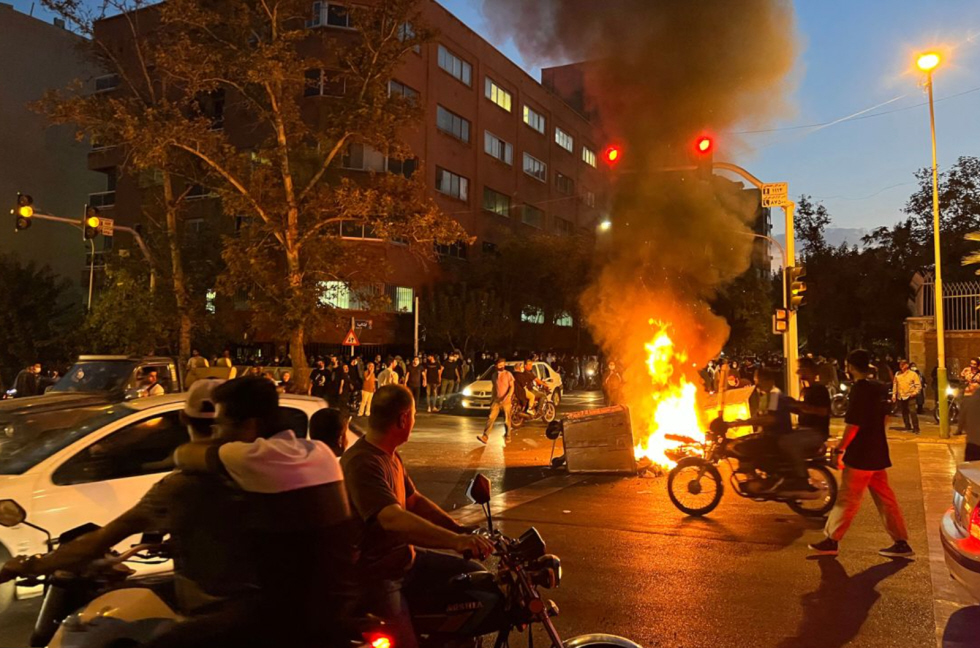
Iran’s Supreme Leader Ayatollah Ali Khamenei delivered a hardline message on Saturday, insisting that “rioters must be put in their place” after a week of protests that have shaken the Islamic Republic. His remarks are widely interpreted as a signal to security forces to intensify their crackdown on demonstrators, as unrest fueled by economic hardship continues to spread across the country. The comments from the 86-year-old cleric come amid growing violence linked to the protests, which have reportedly left at least ten people dead.
Demonstrations erupted in response to soaring inflation, a collapsing currency, and worsening living conditions, exposing deep public frustration with Iran’s leadership and economic management. Despite arrests and security measures, the protests show little sign of subsiding. The unrest has also taken on an international dimension following warnings from U.S. President Donald Trump. On Friday, Trump said that if Iranian authorities “violently kill peaceful protesters,” the United States would be prepared to “come to their rescue.” While Trump did not specify how or whether Washington would intervene, his remarks immediately escalated tensions. Iranian officials responded angrily, with figures within the ruling theocracy warning that any U.S. involvement would prompt retaliation against American troops stationed across the Middle East.
The exchange underscored the fragile security balance in the region and highlighted how domestic unrest in Iran could rapidly spill over into a broader geopolitical confrontation. Trump’s comments gained additional weight after he announced on Saturday that U.S. forces had captured Venezuelan President Nicolás Maduro, a longtime ally of Tehran. The development reinforced fears among Iranian leaders that Washington may be prepared to take direct action against governments it considers hostile, further amplifying the sense of external pressure surrounding the protests.
The current demonstrations represent the largest wave of unrest in Iran since 2022, when the death of 22-year-old Mahsa Amini in police custody sparked nationwide protests. While the present movement has not yet reached the same scale or intensity, it echoes similar grievances related to state authority, economic despair, and personal freedoms. As protests continue and rhetoric hardens on all sides, Iran faces a volatile moment.
The leadership appears determined to suppress dissent, while protesters remain defiant despite mounting risks. With international tensions rising and domestic pressure intensifying, the situation remains highly unstable, raising questions about how far both Tehran and Washington are willing to go in the days ahead.