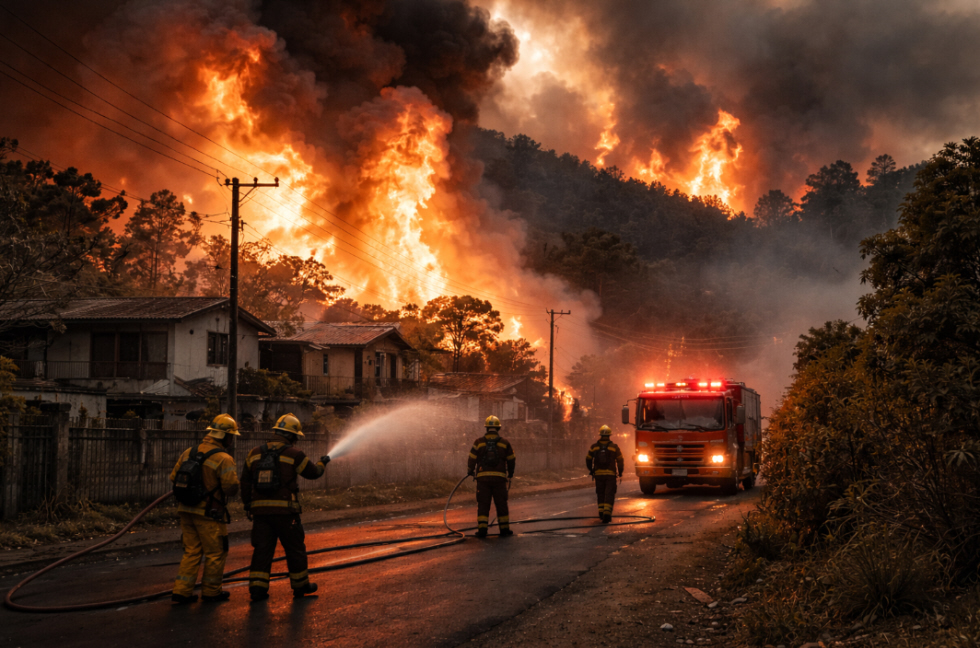
Wildfires continue to devastate Chile, where at least 19 people have lost their lives and tens of thousands have been forced to flee their homes. The speed and intensity of the flames have turned the situation into one of the country’s most serious emergencies in recent years. In response to the rapidly spreading fires, President Gabriel Boric declared a state of emergency in the regions of Ñuble and Biobío, located about 500 kilometers south of Santiago.
The measure is intended to strengthen the government’s response and allow the deployment of extraordinary resources to confront the crisis. Authorities reported that more than 50,000 people have been displaced in just two days, while thousands of homes remain under threat. High temperatures combined with strong winds have severely complicated firefighting efforts and fueled the expansion of active fire fronts into residential areas. Nearly 4,000 firefighters are working around the clock to contain the blazes, now supported by the Armed Forces following the emergency declaration.
Military units have been deployed to assist with security, evacuations, and maintaining public order in affected communities. In the port town of Lirquén, soldiers were seen patrolling the streets as preventive evacuations intensified. President Boric traveled to the city of Concepción, in the Biobío region, to personally oversee firefighting operations and assess the evolving situation on the ground. As part of the emergency measures, the government announced curfews in some of the hardest-hit areas. The president warned that conditions remain “very difficult” and urged residents to strictly follow official instructions to prevent further loss of life.
The fires have reached residential neighborhoods in several cities, with Penco among the most severely affected. Local authorities indicated that most of the fatalities have occurred there, where the flames advanced rapidly and left widespread destruction. Chile has faced recurring large-scale wildfires in recent years, a trend that has intensified over time.
The current disaster revives memories of the deadly fires that struck the Valparaíso region in 2024, when more than a hundred people died, once again raising urgent questions about prevention and emergency preparedness.