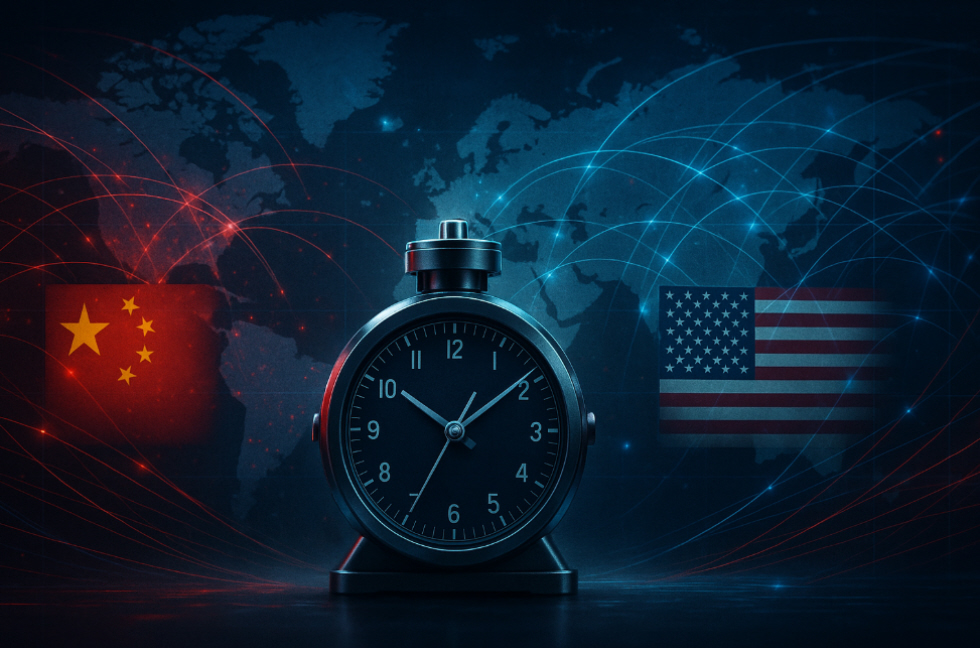
China has accused the United States National Security Agency (NSA) of conducting a prolonged series of cyberattacks against its National Time Service Center, a key institution responsible for maintaining and distributing the country’s official standard time. According to China’s Ministry of State Security, the U.S. agency allegedly exploited a vulnerability in a foreign smartphone brand to gain access to employees’ mobile devices, stealing internal information and login credentials as far back as 2022.
It further claims that the NSA deployed dozens of specialized cyber tools to infiltrate internal networks and attempt to compromise the high-precision timing system that ensures synchronization with international time standards. So far, the U.S. Embassy in Beijing has not issued an official response to these allegations. The incident carries major implications, as an attack on national time-keeping infrastructure could trigger severe disruptions across multiple critical sectors — from communications and financial systems to electricity supply and transport networks.
Manipulating or interrupting the standard time could destabilize the synchronization that millions of devices and networks rely upon to operate securely and efficiently. This accusation also deepens the ongoing technological and political tension between the world’s two largest powers, which have repeatedly accused each other of cyber espionage, data theft, and covert digital operations, each seeing the other as its primary threat in cyberspace.
According to the Chinese government, the authorities have already strengthened their cybersecurity defenses and mitigated the risks caused by the intrusion. Beijing has called on Washington to immediately cease what it describes as unlawful digital surveillance activities and has pledged to reinforce protection across its strategic institutions. The United States has remained silent for now, though analysts believe the episode may lead to diplomatic responses, independent technical audits, and tighter global cybersecurity measures.
The controversy opens yet another chapter in the technological standoff between the two superpowers — a struggle increasingly defined not only by trade and innovation but also by the race to control information, intelligence, and the digital infrastructure of the future.