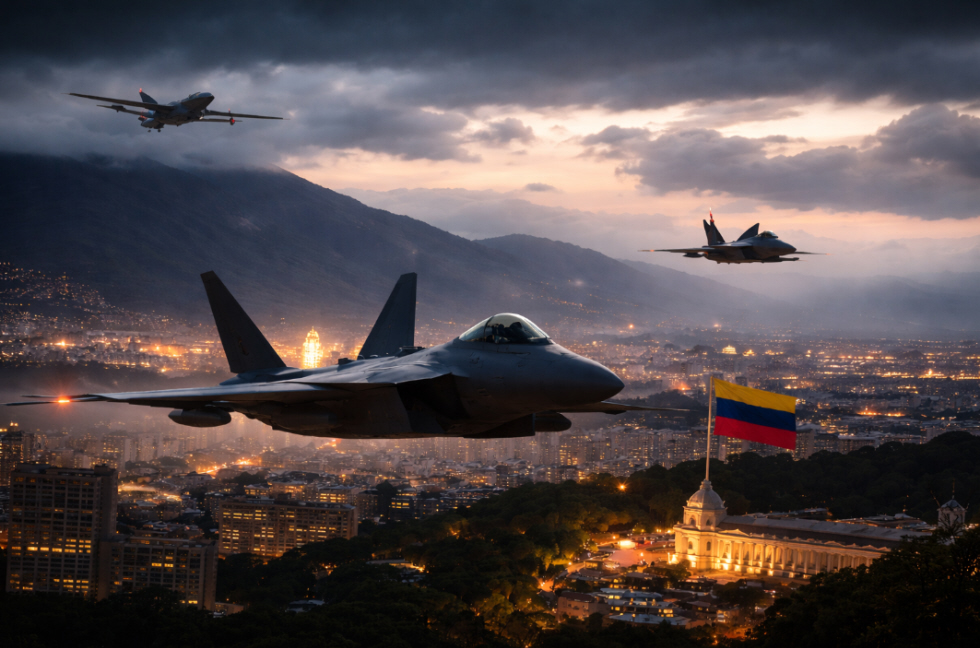
A U.S. operation carried out in Caracas has reshaped the geopolitical landscape of the region and sent a powerful, though unspoken, strategic message to global actors. The mission resulted in the arrest of Venezuelan President Nicolás Maduro and his wife, Cilia Flores, who were later transferred to the United States to face criminal charges linked to narcoterrorism. The operation unfolded swiftly and without prior public warning, underscoring the depth of U.S. intelligence reach inside the Venezuelan capital.
While official statements have remained measured and limited, the scale and precision of the action have drawn international attention, particularly among countries closely aligned with Caracas. Beyond the immediate political impact, analysts view the events as a demonstration of operational effectiveness rather than a declaration of technological superiority. Washington has avoided detailed commentary, consistent with long-standing security doctrines that prioritize discretion and the protection of sensitive capabilities.
The absence of an effective early response inside Venezuela has raised questions among observers about the operational readiness of the country’s defense infrastructure. Venezuela has long relied on foreign-supplied systems, including equipment from strategic partners such as China and Russia, making the incident relevant well beyond its national borders. For Beijing and Moscow, the events in Caracas are being quietly assessed as a reputational challenge. Venezuela has been one of their most prominent allies in South America, and the inability to prevent or detect the operation has sparked broader discussions about deterrence, preparedness, and real-world performance under modern conditions.
At the same time, critics of the operation have pointed to legal and ethical concerns, arguing that the action may conflict with international norms and domestic legal frameworks. These debates continue to unfold, highlighting the complex balance between national security, sovereignty, and the rule of law. From a broader perspective, the operation reflects a long-standing reality of global power dynamics. Major powers rarely articulate their full capabilities openly, relying instead on actions that speak for themselves while maintaining strategic ambiguity. For audiences within the United States, the episode also serves as a reminder of an often-overlooked truth: security and stability at home are sustained by decisions and actions that frequently take place far from U.S. borders.
These measures are not without cost or controversy, but they are part of a system designed to prevent threats from materializing domestically. The situation in Venezuela continues to evolve, with diplomatic, legal, and political consequences still emerging. What remains clear is that the operation has left a lasting mark on regional and global calculations, particularly regarding alliances and defense credibility. In an era of rising geopolitical competition, the events in Caracas illustrate how power is exercised not through proclamations, but through outcomes. As history has repeatedly shown, freedom and security are rarely free — they are maintained through vigilance, restraint, and difficult choices made beyond public view.