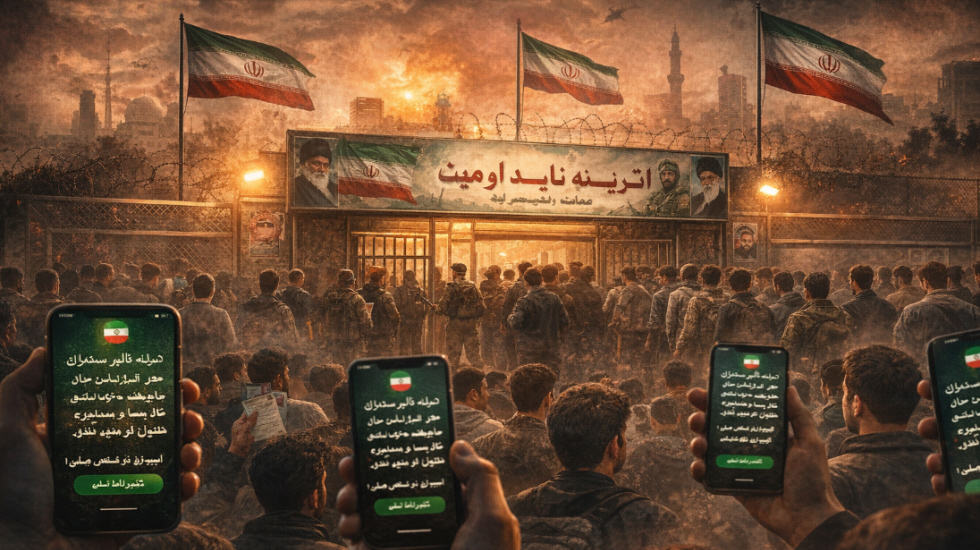
Iran appears to be intensifying its internal mobilization efforts as tensions in the region continue to rise. In recent days, reports indicate that authorities have launched a widespread messaging campaign aimed at encouraging citizens to join national defense efforts. The move comes amid growing fears of a broader escalation involving external forces. It reflects a shift toward preparing the population for a more uncertain security environment.
The campaign has reportedly relied on mass text messages sent directly to citizens, urging them to support the country in the face of perceived external threats. This approach highlights the use of modern communication tools to rapidly reach large segments of the population. It also suggests an effort to create a sense of urgency and national unity. The messaging appears designed to reinforce internal cohesion during a critical moment.
Such actions are often interpreted as early indicators of strategic preparation. While not necessarily confirming imminent military confrontation, they point to a heightened state of alert within the country. Governments facing potential conflict frequently turn to mobilization strategies to ensure readiness. In this case, the scale of the outreach has drawn particular attention. The broader regional context adds weight to these developments. Ongoing tensions involving multiple actors have already increased the risk of miscalculation. Any signal of internal mobilization can therefore be seen as part of a larger pattern of escalation.
Analysts are closely monitoring these moves for signs of further shifts. At the same time, the campaign may also serve a psychological purpose. By projecting readiness and determination, authorities can aim to deter potential adversaries. This dual function — internal preparation and external signaling — is a common feature in periods of heightened geopolitical tension. It underscores the complexity of interpreting such actions. Domestic considerations are also likely playing a role. In times of crisis, governments often seek to strengthen internal unity and reinforce public support. Messaging campaigns can help align public perception with national objectives.
They may also act as a tool for maintaining stability under pressure. However, questions remain about the actual impact of such efforts. Mobilization through messaging does not automatically translate into operational capability. The effectiveness of these campaigns depends on broader institutional readiness and public response. These factors remain difficult to assess in real time. The situation also raises concerns about potential escalation pathways.
Increased mobilization, even if defensive in nature, can be interpreted by others as a sign of aggressive intent. This dynamic can contribute to a cycle of action and reaction. Managing these perceptions becomes critical in avoiding unintended consequences. International observers continue to follow the developments closely. The combination of military activity, diplomatic positioning, and internal mobilization suggests a rapidly evolving scenario.
Each element adds another layer of complexity to an already fragile situation. The coming days may provide greater clarity on the direction of events. In this environment, Iran’s reported recruitment messaging stands as a significant signal.
Whether it represents precaution, strategy, or psychological positioning, it reflects a region moving deeper into uncertainty. The balance between preparation and escalation remains delicate. And how these signals are interpreted could shape what comes next.