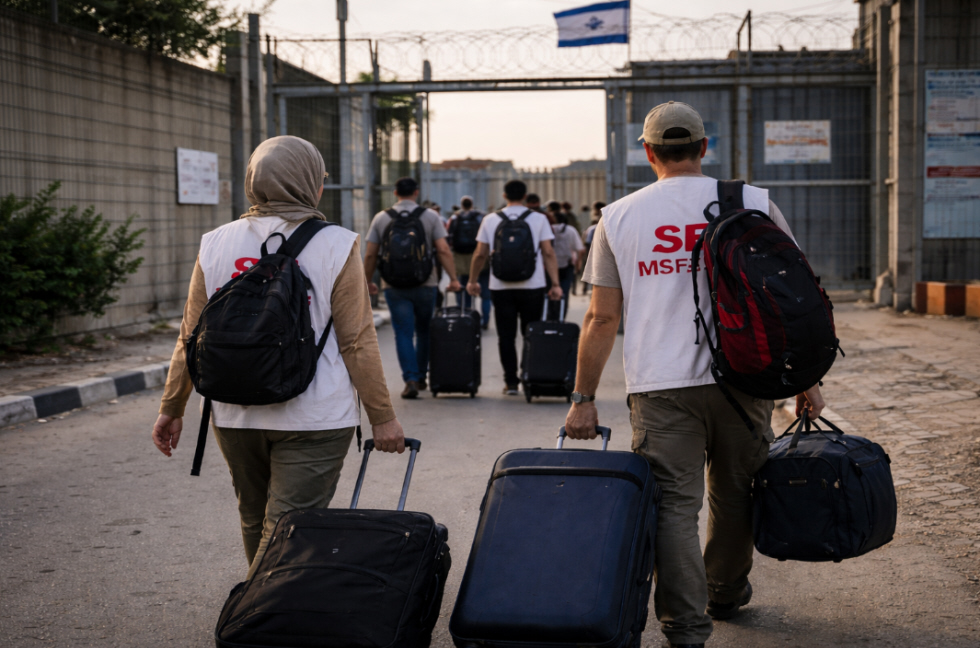
The Israeli government announced that, starting January 1, dozens of international humanitarian organizations will no longer be permitted to operate in the Gaza Strip. Among the affected groups is Doctors Without Borders (Médecins Sans Frontières, MSF), one of the most prominent medical organizations providing aid in the enclave. Israeli authorities stated that the decision was taken after determining that these organizations do not comply with newly established operational requirements.
According to Israel, the new rules require humanitarian groups to share more detailed information about their activities, funding sources, and personnel, as well as to coordinate certain resources with the state. Israeli officials argue that these measures are necessary for security and transparency, particularly amid ongoing conflict and concerns about militant infiltration into civilian and humanitarian structures.
The organizations impacted have strongly rejected the new conditions, describing them as arbitrary and potentially dangerous for their staff. They warn that the regulations could undermine their independence, expose workers to greater risks, and obstruct the delivery of impartial humanitarian assistance to civilians. With the suspension of these groups, roughly one quarter of international aid operations in Gaza would effectively disappear.
Doctors Without Borders had already been forced to suspend its activities in Gaza for several weeks in September, following repeated accusations by Israel alleging cooperation with Hamas and other militant groups. The organization has categorically denied these claims, insisting that it operates under strict principles of neutrality, independence, and medical ethics.
According to figures provided by the organization, MSF supports approximately one fifth of all hospital beds in Gaza, highlighting the scale of its role in an already strained healthcare system. The potential withdrawal of the group could significantly worsen the humanitarian situation, particularly in areas such as emergency care, war-related surgery, and treatment of chronic illnesses.
The Israeli decision has raised serious concerns among humanitarian actors, who warn that restricting international aid access in Gaza could have severe consequences for the civilian population. Meanwhile, affected organizations are seeking dialogue with Israeli authorities in an effort to avoid a complete shutdown of their operations, as the tension between security priorities and humanitarian needs continues to shape the conflict.