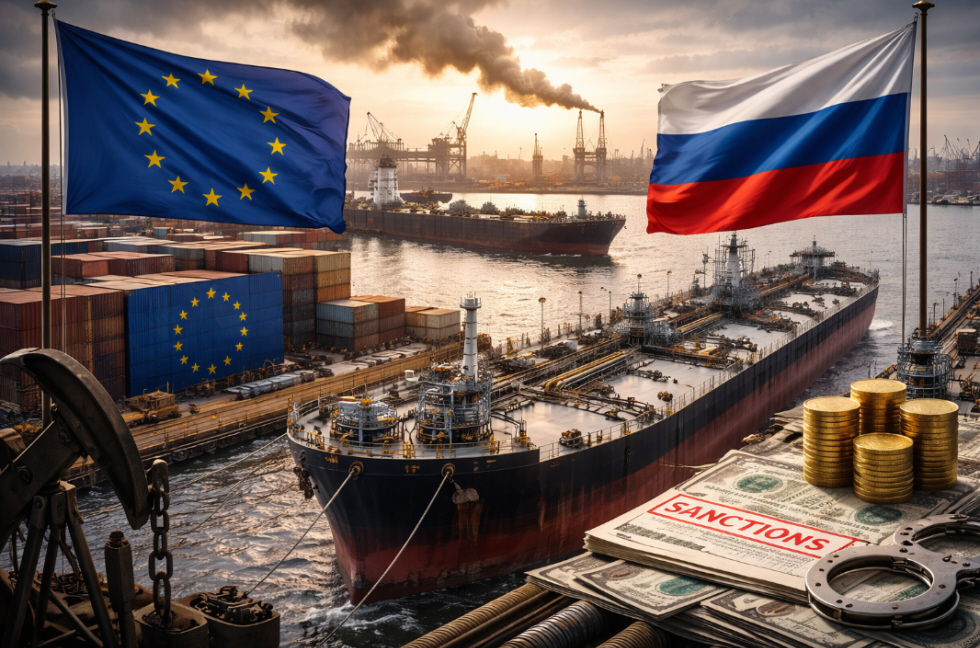
The European Commission has taken a new step in its economic pressure strategy against Russia by unveiling a proposed twentieth package of sanctions aimed squarely at further reducing Moscow’s energy revenues. The initiative seeks to tighten remaining channels through which Russian oil continues to generate income. At the core of the proposal is a strong focus on the maritime sector, a crucial pillar of Russia’s oil export capacity.
The draft introduces a comprehensive ban on maritime services for tankers carrying Russian crude, significantly expanding the scope of existing restrictions. The proposed ban goes beyond shipping itself and targets essential services such as insurance, financing, technical certification, and access to port services. Without these elements, operating oil tankers in international markets becomes increasingly difficult and economically unviable. Brussels has made clear that limiting direct oil purchases is no longer sufficient. The strategy now aims to disrupt the entire logistical and financial infrastructure that enables
Russian crude to reach global markets, even through indirect routes. In addition to energy-related measures, the sanctions package introduces new import bans on metals, chemical products, and critical minerals that had previously escaped punitive action. These materials play an important role in both Russia’s industrial base and global supply chains. The inclusion of critical minerals signals a long-term strategic approach by the European Union. Rather than focusing solely on immediate pressure, the Commission is targeting sectors that underpin Russia’s industrial and technological capacity.
The twentieth package also seeks to close loopholes identified in earlier rounds of sanctions, where certain services and goods continued to flow through alternative mechanisms. The EU is now aiming for tighter enforcement and greater consistency across its measures. However, the proposed sanctions are not without potential costs for Europe itself. Additional restrictions could further strain energy and commodity markets already grappling with global volatility and uncertainty.
For investors and analysts, the announcement reinforces the view that the economic confrontation between the European Union and Russia is far from over. Each new sanctions package deepens a scenario of prolonged economic conflict and structural shifts in global trade. With this proposal, the European Commission sends a clear signal that economic pressure will remain a central strategic tool. Oil, maritime logistics, and critical minerals have become key battlegrounds in a confrontation that extends well beyond traditional diplomacy.