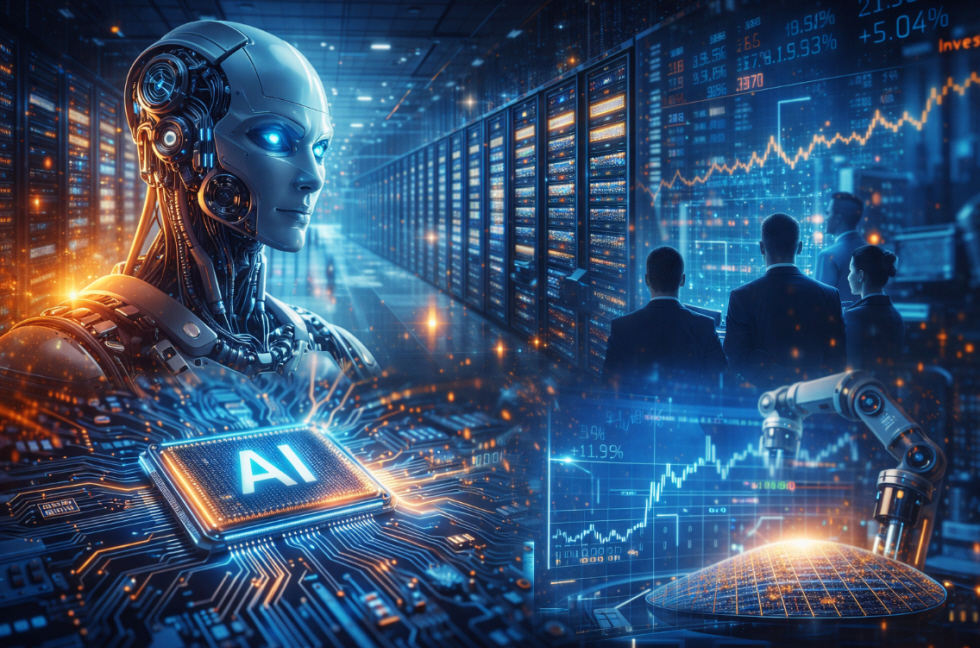
Artificial intelligence is rapidly establishing itself as the new core axis of global economic power, attracting massive investments from the world’s leading technology corporations. What was once considered a long-term bet has now become a strategic race for digital dominance. Major companies are allocating unprecedented resources to build technological infrastructure, including advanced data centers, high-performance chips, and processing systems capable of supporting the exponential growth of artificial intelligence.
The semiconductor sector has emerged as a fundamental pillar in this transformation. Demand for cutting-edge chips has surged, driving new partnerships and large-scale industrial expansion across multiple regions. At the same time, tech giants are competing to lead the development of increasingly sophisticated AI models. This competition is not only commercial but also strategic, as it will determine who controls the platforms of the future.
These investments are not limited to the United States. Asia and Europe are accelerating their own technological initiatives, aiming to reduce external dependence and strengthen digital autonomy in an increasingly competitive environment. This global movement is creating a new form of economic rivalry, where technological innovation becomes a decisive factor of power.
Countries and corporations that lead this transformation will gain significant advantages across multiple industries. At the corporate level, artificial intelligence is already being integrated into key processes such as automation, data analysis, and strategic decision-making. This shift is redefining operational efficiency and opening new business opportunities. However, this rapid expansion also brings important challenges.
The energy consumption of large-scale data infrastructure, as well as the need for regulation, are becoming central issues on the global agenda. Meanwhile, financial markets are closely monitoring this trend.
Companies linked to artificial intelligence are attracting significant capital, positioning themselves as key players in the emerging digital economy. The world is entering a new phase where artificial intelligence is not just a technological tool, but a structure of power. Those who control this technology will have the ability to shape the global economic landscape in the years to come.