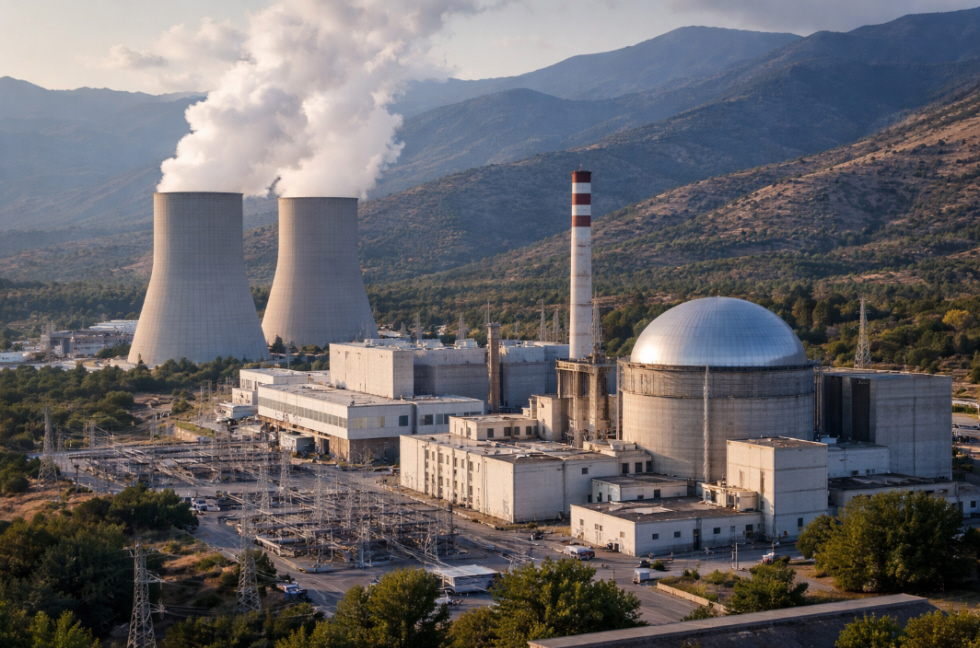
The United States and Armenia have reached an agreement to cooperate in the civilian use of nuclear energy, a move that reshapes the energy and geopolitical landscape of the South Caucasus. The deal allows the United States to legally export nuclear technology, equipment, and services to Armenia, establishing a secure framework for long-term cooperation in a highly sensitive sector.
Until now, Armenia has relied heavily on Russia and Iran to meet its energy needs, a dependency the government in Yerevan is seeking to reduce by diversifying its strategic partners. A central element of the agreement involves the potential construction of a new nuclear reactor to replace the aging Metsamor power plant, a facility rooted in Soviet-era technology and originally developed with Russian support.
Armenia is currently reviewing proposals from several countries, including the United States, Russia, China, France, and South Korea, reflecting growing international interest in the country’s energy sector. US officials indicated that the initial volume of exports tied to the agreement could reach several billion dollars, with additional long-term contracts expected for fuel supply and maintenance.
From Armenia’s perspective, the pact offers a pathway to modernize its energy infrastructure, improve operational safety, and lessen its reliance on traditional suppliers. The agreement was signed within a broader political context shaped by a recent peace deal between Armenia and Azerbaijan, aimed at stabilizing a region long affected by conflict.
At the same time, the United States is promoting regional connectivity initiatives designed to strengthen links between Asia and Europe while bypassing routes that cross Russia and Iran. Taken together, the nuclear cooperation between Washington and Yerevan signals a strategic realignment whose implications extend beyond energy, potentially altering long-standing balances of influence in the South Caucasus.