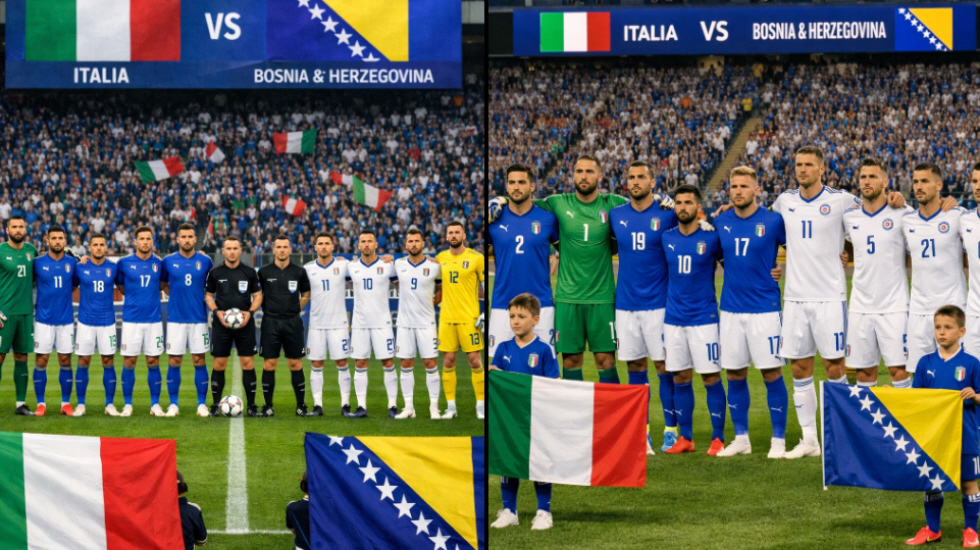
The elimination of the Italy national football team has once again shaken European football, but this time with a different tone: there was no shock, only resignation. The defeat in the decisive playoff left the team out of the World Cup once again, confirming a crisis that can no longer be seen as temporary. The match played in Zenica against Bosnia-Herzegovina reflected a team struggling to rediscover its identity.
Italy, historically one of football’s great powers, showed fragility, lack of clarity, and a worrying disconnect in key moments of the game. The reaction from the Italian press was immediate, yet revealing. Rather than anger or outrage, what dominated was a sense of emotional fatigue. The loss did not trigger the disbelief of previous years, but instead a quiet acceptance of a recurring reality.
Major outlets began openly discussing a deeper structural crisis. Issues such as the lack of player development, inconsistent long-term planning, and the absence of strong leadership on the pitch have all been highlighted as key factors behind the decline. For a third consecutive cycle, Italy will miss football’s biggest stage—an outcome that would have been unthinkable decades ago.
What was once considered an anomaly now risks becoming a pattern, raising serious questions about the direction of the national project. The impact goes beyond results on the field. Italy is not only losing matches, but also its position within the global elite. Absence from the World Cup weakens its legacy and reshapes how the team is perceived on the international stage. Criticism has also extended to institutional management, with increasing scrutiny on decisions made in recent years.
The lack of results is now translating into broader pressure for change, both within the federation and across the football structure. The challenge ahead is greater than ever. Italy must rebuild from the ground up if it hopes to regain its prestige. This is no longer about a single elimination, but about reversing a trend before the gap with the world’s elite becomes too wide to close.
 Boston Celtics
 Denver Nuggets
 Milwaukee Bucks
 Phoenix Suns
 Golden State Warriors
 Los Angeles Lakers
 Miami Heat
 Dallas Mavericks