Eduard Batlle spent much of his youth surrounded by ovens, flour sacks, and long pre-dawn hours in his family’s bakery. While others celebrated Christmas, he helped his parents prepare thousands of traditional Three Kings cakes in a working-class neighborhood between Barcelona and L’Hospitalet de Llobregat, in an Spain deeply marked by the social crises of the 1980s. Those years were far from idyllic. Heroin ravaged the neighborhood, several of his friends fell into addiction, and violence was part of everyday life. Robberies were frequent, and Batlle often accompanied his mother to the bakery on Saturdays so she would not be alone, fearing knife-point assaults.
“It was a pretty rough time,” he recalls candidly. Rather than pushing him toward resignation, that environment drove him toward education. Inspired by the 1980s television series Cosmos, the baker’s son decided to study Biology, convinced that science could offer real answers to humanity’s biggest challenges. Decades later, that decision would place him at the center of one of Spain’s most promising medical breakthroughs. About ten years ago, Batlle and five colleagues developed a new experimental molecule known as petosemtamab, an antibody designed to enhance the immune system’s ability to recognize and attack cancer cells.
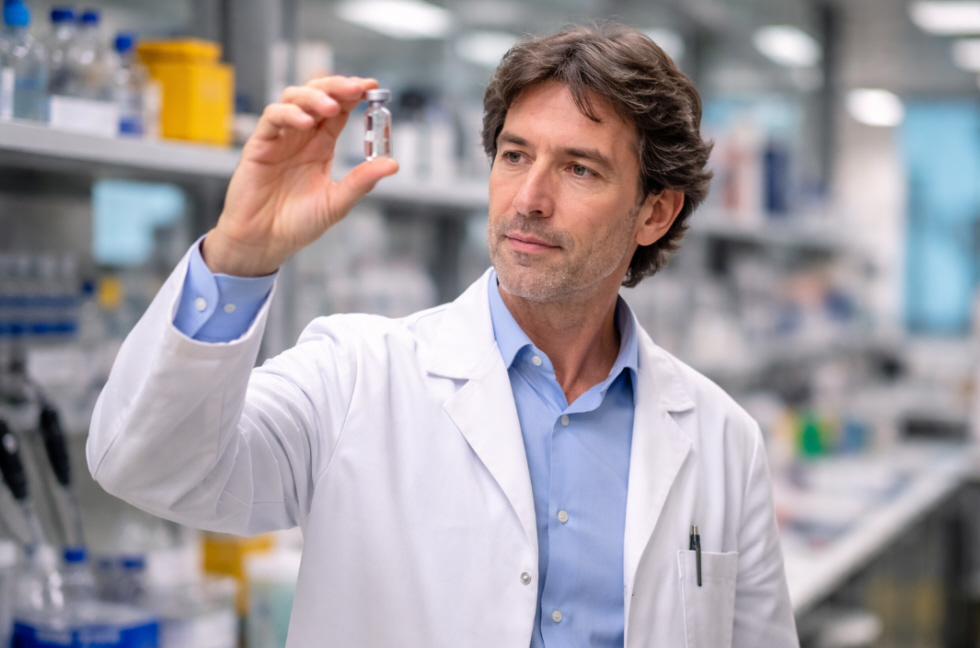
What began as a laboratory project soon attracted the attention of the international biotechnology sector. “This is Peto,” Batlle says with a restrained smile as he lifts a small empty glass vial in his office at the Institute for Research in Biomedicine in Barcelona (IRB Barcelona). In a container just like it, the drug was administered in May 2018 to the first human patient, marking the start of its clinical journey. Early trials produced encouraging signals, but the real turning point came months ago. In a study involving patients with head and neck cancer—an aggressive disease often linked to tobacco and alcohol use—the results began to exceed expectations.
When combined with standard immunotherapy, petosemtamab achieved complete tumor remission in six patients. Overall, 63 percent of the 43 participants showed a partial or complete response to treatment, figures considered remarkable in a cancer type with limited therapeutic options. From a medical standpoint, speaking of a “cure” remains premature. Specialists prefer the term complete remission, as long-term follow-up will be required to confirm whether the results are durable. Even so, in oncology, responses of this magnitude in early-stage trials are considered exceptional.
The impact did not go unnoticed by the pharmaceutical industry. Danish biotech company Genmab agreed to pay approximately €7 billion to acquire the rights to petosemtamab, a figure that reflects not certainty, but a strong strategic bet on its therapeutic potential. In biomedicine, investments of this scale occur when a molecule demonstrates early efficacy, a clear mechanism of action, and an acceptable safety profile. Genmab did not purchase a guaranteed cure, but rather years of research, accumulated knowledge, and the possibility of expanding the drug’s use to other cancers. For Batlle, financial success does not overshadow the central mission.
The scientist repeatedly stresses caution, emphasizing that decisive clinical phases still lie ahead and that science advances step by step. “We have to be responsible with expectations,” he often says, aware of the weight the word hope carries for patients and families. Still, the contrast is striking. From a childhood marked by drugs, violence, and predawn hours in a small bakery, Batlle has become a leading figure behind one of Europe’s most promising oncology developments.
Eduard Batlle’s journey is not just a story of individual success, but a demonstration of how biomedical research—when given time, resources, and rigor—can transform realities. It offers no miracles, but it opens doors that for decades seemed firmly closed.