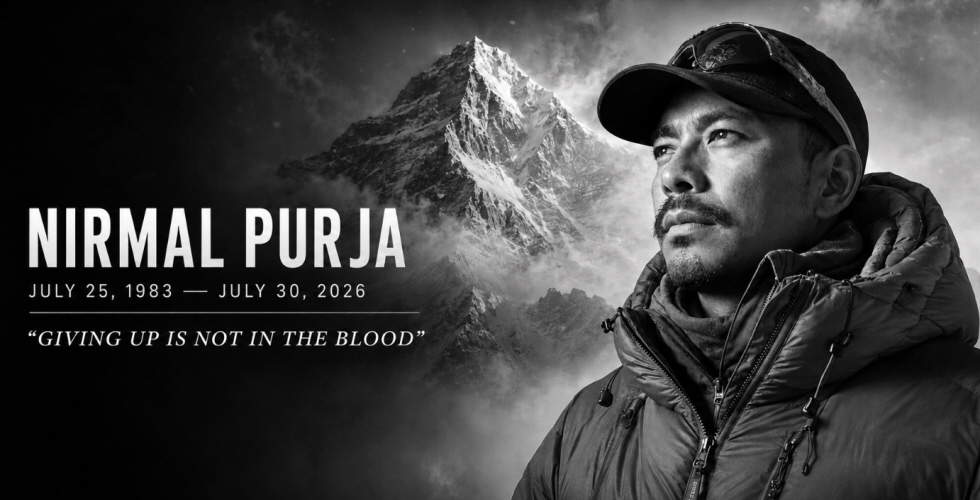
The death of celebrated Nepali-British mountaineer Nirmal Purja has shaken the international climbing community. The 43-year-old athlete lost his life in a devastating avalanche on Broad Peak in Pakistan. The expedition company he co-founded officially confirmed his death during the weekend. The tragedy also claimed the lives of the other nine members of the expedition. The accident occurred while the group was moving through an area between Camps Two and Three. A massive wall of snow suddenly descended upon the climbers and swept them several hundred meters down the mountain.
Their tracking devices recorded violent movements shortly before all communication stopped. The enormous scale of the avalanche quickly diminished any hope of finding survivors. Purja achieved worldwide recognition through a career defined by endurance, speed and extreme challenges. In 2019, he climbed all fourteen mountains in the world that rise above 8,000 meters. The mountaineer needed only 189 days to complete a feat that had previously taken other climbers several years. His extraordinary accomplishment transformed his life and permanently changed the history of high-altitude climbing.
His remarkable journey continued after completing the fourteen eight-thousanders in record time. Purja joined the entirely Nepali team that achieved the first winter ascent of K2 in 2021. He also reached the dangerous summit without using supplementary oxygen during the final ascent. That expedition became a powerful symbol of the talent and determination of Nepal’s mountaineers. Purja’s influence extended far beyond his records and international expeditions. For decades, Nepali climbers performed essential work without receiving the same recognition given to foreign mountaineers.
Purja used his popularity, documentaries and communication skills to challenge that traditional narrative. His success helped place Nepali guides and athletes at the center of the global mountaineering community. The Broad Peak expedition represented another important chapter in his extensive professional career. The group was advancing toward the summit of the 8,051-meter mountain, considered one of the most demanding peaks on Earth. Recent snowfall had created unstable conditions and significantly increased the danger of avalanches. The powerful slide struck the expedition in a remote area that was extremely difficult for rescuers to reach.
Pakistani rescue teams worked for several days under severe and rapidly changing weather conditions. Seven bodies, including that of Nirmal Purja, were recovered through difficult ground and aerial operations. Authorities continued searching for the remains of the other three members of the expedition. Bad weather, extreme altitude and helicopter limitations complicated every movement made by the rescuers. The expedition included mountaineers from Nepal, Pakistan, Oman, the United States and China. Among the victims were experienced guides, professional climbers and athletes pursuing deeply personal goals.
The group’s diversity reflected the powerful international attraction of the Karakoram mountains. The tragedy united five countries in mourning and recognition of those who lost their lives. Purja’s death prompted tributes from athletes, officials and admirers throughout the world. Thousands remembered his rescue missions, expeditions and unwavering defense of Nepal’s climbing community.
“Giving up is not in the blood” became one of the phrases most closely associated with his philosophy. That message represented a career built upon discipline, preparation and an extraordinary determination to overcome limitations. Broad Peak will forever be connected with the final chapter in the life of one of modern mountaineering’s greatest figures.
The loss of all ten expedition members demonstrates the enormous dangers faced by those who challenge the world’s highest mountains. Nirmal Purja turned an individual career into a platform for defending the talent and dignity of an entire generation. His records may eventually be surpassed, but his influence on global mountaineering will endure for many years.