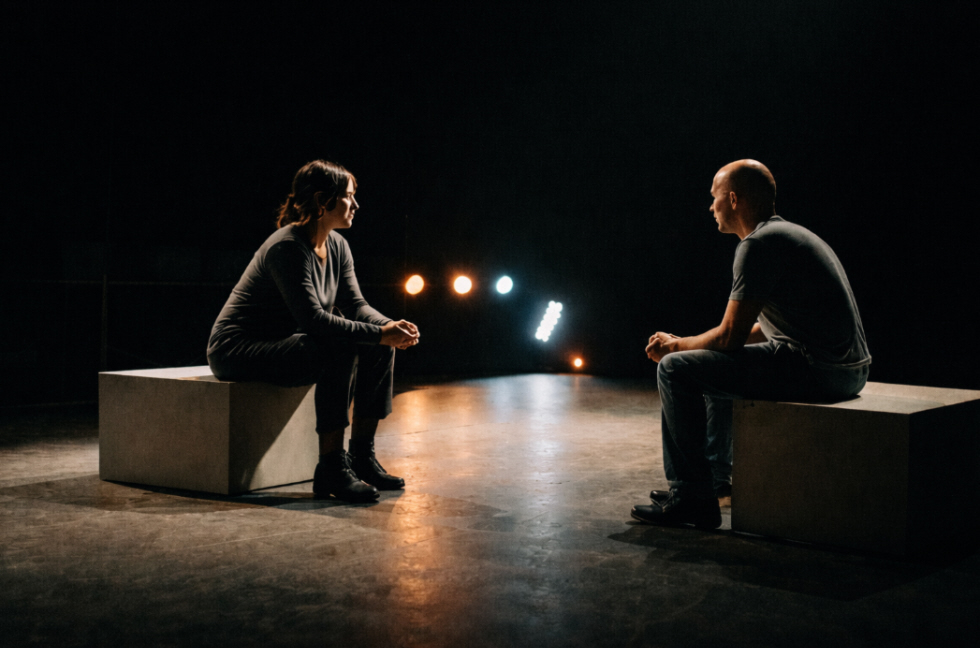
Contemporary theater is going through a moment of deep and quiet renewal that brings it back to its essence as a space for collective reflection and direct human experience. In major cultural capitals around the world, from Europe to Latin America, new theatrical productions are focusing on intimate and universal stories that place the individual at the center, exploring inner conflicts and the relationship with an increasingly fast-paced and fragmented society.
Far from large, spectacular productions, many creators are choosing minimalist stage designs, small casts, and an expressive use of light and silence, relying on the power of text and performance as the emotional driving forces of each play. The themes most present in these productions include urban loneliness, personal and collective memory, identity, the fragility of human relationships, and the impact of technology on everyday life.
For directors and playwrights, theater is once again becoming an almost artisanal act, where each performance is unique and unrepeatable, and where the direct contact between actors and audience creates a connection that is difficult to replicate in other cultural formats. In this context, theater venues are reaffirming themselves as spaces of cultural resistance, where time slows down and spectators are invited to think, feel, and question their own reality.