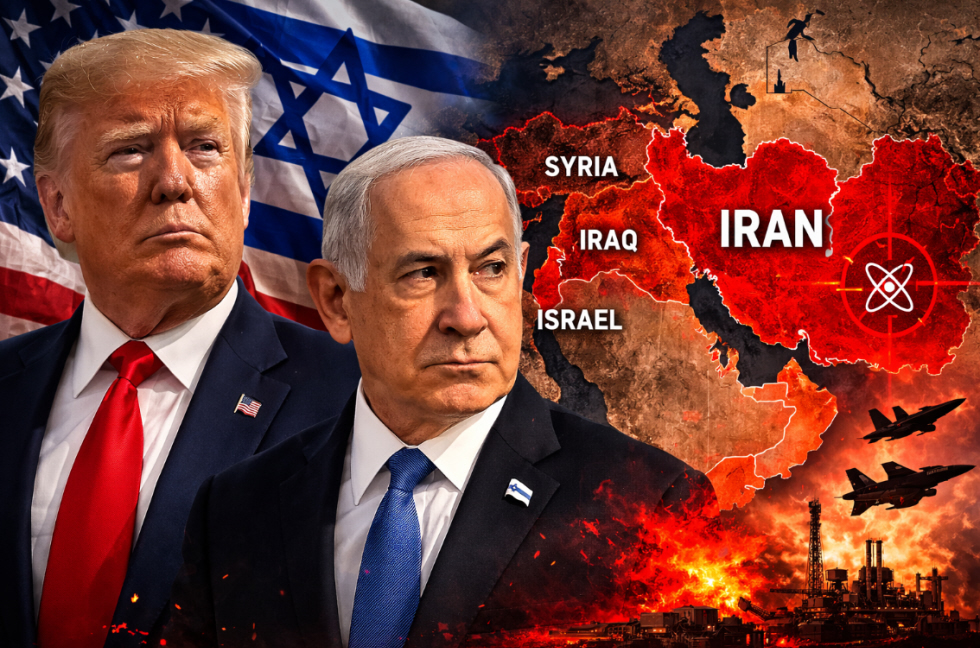
The decision by President Donald Trump to support military action against Iran cannot be viewed as an isolated event. Behind this move lies a complex combination of strategic pressure, regional interests and a growing sense that diplomacy had reached its limits. In international politics, once trust collapses, dialogue often gives way to force. A key factor shaping this moment was the firm position of Israeli Prime Minister Benjamin Netanyahu.
For years, Israel has warned that it considers any major military or nuclear advance by Iran an unacceptable threat. From Israel’s perspective, the issue is not merely political but existential. When diplomatic negotiations begin to appear ineffective, the temptation to pursue military options grows stronger. The talks intended to reduce tensions were increasingly trapped by mutual distrust and incompatible strategic goals. As a result, the space for compromise gradually disappeared. International politics rarely operates under clear moral principles. Instead, it is driven by calculations of power, security and regional balance.
The United States, as Israel’s main ally, constantly faces pressure to demonstrate support during moments of crisis, particularly in a region where every decision can alter the strategic equilibrium. History shows that wars in the Middle East rarely remain contained. Each conflict tends to produce new tensions, new actors and unpredictable consequences. Decisions made in a matter of hours can influence global stability for decades.
It is also important to recognize that the end of diplomacy is never a positive development. Negotiation exists precisely to prevent conflicts from escalating into violence. Once that path disappears, the international environment enters a far more dangerous phase. In Iran’s case, the situation is particularly sensitive because of its regional influence.
Tehran maintains political and military connections with several actors across the Middle East, meaning that any direct confrontation could quickly expand beyond national borders. Supporting military action therefore cannot be understood solely as a matter of U.S. domestic politics. It must be analyzed within a broader geopolitical chessboard involving alliances, rivalries and long-standing regional tensions.
The real challenge now is not only military but political. Even if military operations achieve immediate objectives, the inevitable question will be what comes next. Long-term stability cannot be built through force alone but through sustainable political arrangements. This crisis reminds us of a fundamental truth of international relations: when diplomacy collapses, the world enters a period of uncertainty. And in that uncertainty, the decisions of a few leaders can shape the future of millions. — Williams Valverde