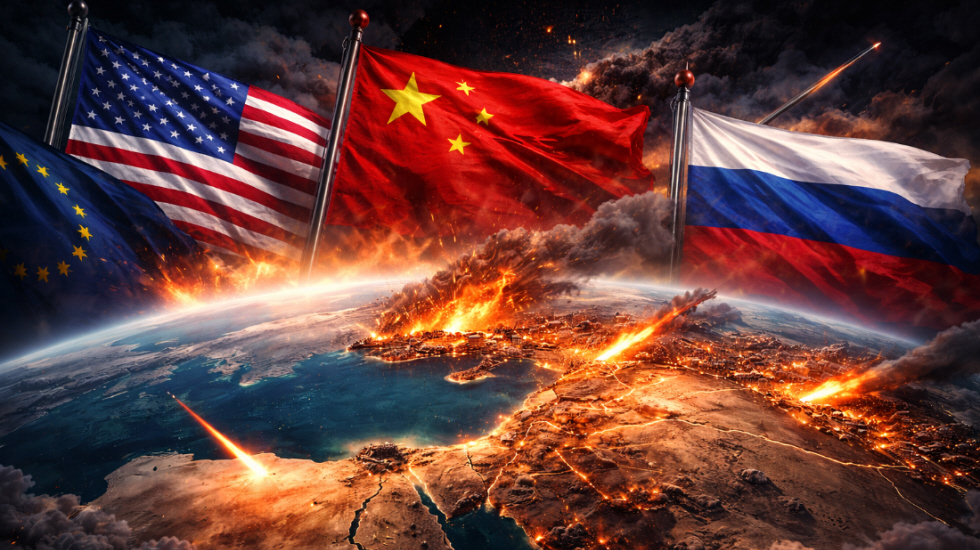
The world is undergoing a silent yet profound transformation in how global power is negotiated. What once took place in large multilateral forums is now being decided in smaller, more selective and strategic settings. The traditional rules of diplomacy are being replaced by more direct dynamics. In this new landscape, not all actors have equal access to influence. One of the most visible shifts is the gradual exclusion of Europe from key negotiations in high-stakes scenarios.
Israel’s recent decision to leave France out of talks with Lebanon reflects a growing lack of trust in certain traditional mediators. This move is not isolated but part of a broader trend. Diplomacy is becoming increasingly selective and less inclusive. At the same time, new actors are stepping into roles that were not previously assigned to them. Pakistan hosting talks between the United States and Iran is a clear example of this reconfiguration. Countries once seen as secondary are gaining strategic relevance.
The regional balance is being redrawn with every new negotiation. The United States, for its part, continues to play a central role in many of these dynamics. However, its strategy has evolved toward a more pragmatic model. Washington is no longer focused on including all actors, but rather on working with those it considers aligned with its interests. This shift is redefining the very concept of global leadership.
In this context, traditional diplomacy based on broad consensus is losing ground to more direct and targeted agreements. Negotiations are becoming faster, but also more exclusive. Stability is no longer built on global agreements, but on specific balances between key players. This shift introduces new layers of uncertainty. Beyond the visible actors, there is a deeper layer of influence that rarely appears at the negotiating table. China and Russia, while not directly participating in many of these talks, significantly shape the environment in which they occur. Their presence is less visible, but no less decisive.
China exercises its influence through economic, technological, and energy power. Its role in global supply chains, particularly in sectors like semiconductors and artificial intelligence, gives it a strategic advantage. Beijing does not need to be present at every negotiation to shape outcomes. Its influence is embedded in the structure of the global system. Russia, on the other hand, acts as a geopolitical pressure factor that shifts regional balances. Its ties with key actors such as Iran and its role in energy and military dynamics give it considerable weight. Moscow benefits from a world where Western cohesion weakens.
Its influence is indirect, but persistent. The combination of these elements is creating a new type of international order where power is not always visible. Decisions are made based on immediate strategic interests, but also under the shadow of external influences. The negotiating table no longer represents the entire board. Part of the game happens elsewhere. At the same time, technology is emerging as a new field of power that reshapes global relations.
Dominance in artificial intelligence and semiconductors adds a new dimension to global competition. Countries and companies controlling these sectors gain influence beyond traditional diplomacy. Power is no longer only political or military. This new order carries clear risks. The fragmentation of the international system may lead to more unpredictable and harder-to-manage conflicts.
The exclusion of key actors from certain negotiations may weaken the legitimacy of agreements. Global stability now depends on more fragile balances. Ultimately, the world is not only reorganizing around new visible players, but also under the influence of actors operating beyond the spotlight. China and Russia do not need to sit at the table to shape outcomes. In this new order, real power moves both within and outside public view.
By:
Williams Valverde