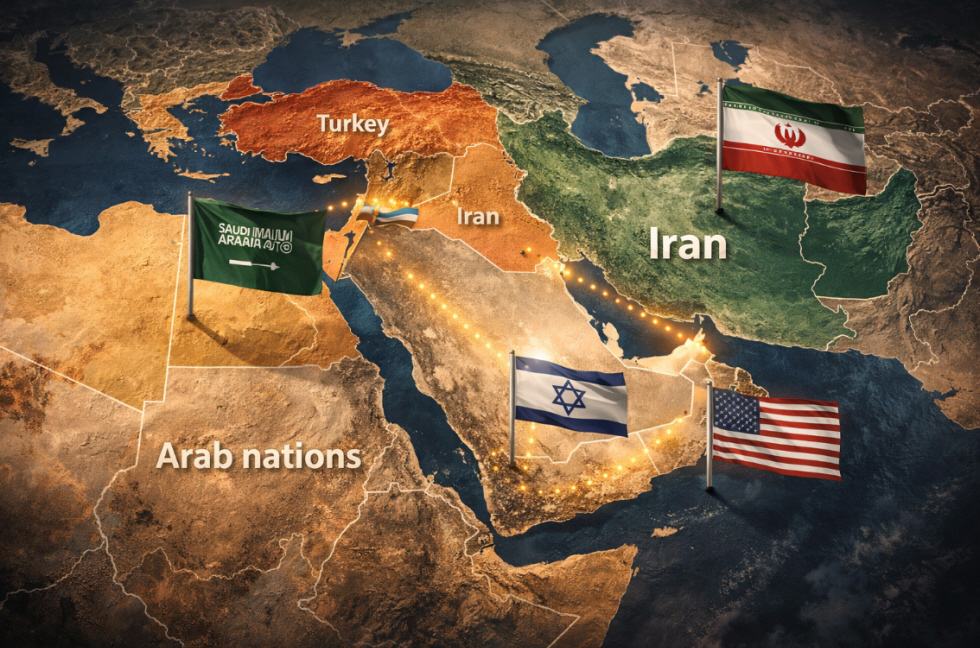
The balance of power in the Middle East can be understood through three major pillars that define its geopolitical structure. On one side stand the traditional Arab nation-states. On another, Turkey as a rising regional force. And finally, Iran as a consolidated strategic power. This triad shapes the direction of the region. For decades, Western powers have sought to influence this system through selective alliances. The strategy has been clear: keep at least two of these poles aligned with their interests.
This balance has helped contain tensions. And maintain a certain degree of stability. Within this framework, Iran has historically been the most isolated actor. Since the 1979 Islamic revolution, its relationship with the West has remained tense. Sanctions and diplomatic pressure have been persistent tools. The strategy has achieved only partial success.
Meanwhile, Turkey has occupied a complex but critical position. As a NATO member and regional power, its role has been essential. Its geographic location and military capabilities make it a decisive actor. Its alignment carries strategic weight. In recent years, however, tensions between Turkey and Israel have been increasing. These frictions have the potential to disrupt the existing balance. The prospect of a deeper rivalry introduces new uncertainty. And it reshapes the strategic landscape. Some political voices have begun to frame this dynamic as a potential “new cold war” with Turkey. This approach carries significant risks.
It not only redefines alliances. It may also push key actors into unintended positions. The problem with this perspective is that it oversimplifies a highly complex reality. Turkey is not an easily predictable actor. Its decisions are guided by its own strategic interests. These do not always align fully with the West. Failing to recognize this complexity could have serious consequences.
An unnecessary confrontation might drive Turkey closer to Iran. Such a shift would alter the regional balance. And strengthen the very actor that has long been contained. In this sense, certain policy choices could end up indirectly benefiting Iran. What may appear as a pressure strategy could become a strategic miscalculation. The geopolitical landscape is constantly evolving. Every move carries weight.
The balance in the Middle East is not sustained by military strength alone. It relies heavily on delicate diplomatic relationships. Managing alliances is essential. And mistakes can have long-term consequences. The future of the region will depend on how these relationships are handled in the coming years.
Maintaining equilibrium among the three poles will be critical. Stability is not guaranteed. And the margin for error is narrow. In this context, understanding the complexity of actors like Turkey becomes essential. Modern geopolitics demands deeper analysis. Oversimplifications can be dangerous. And the regional balance remains at stake.
By:
Williams Valverde