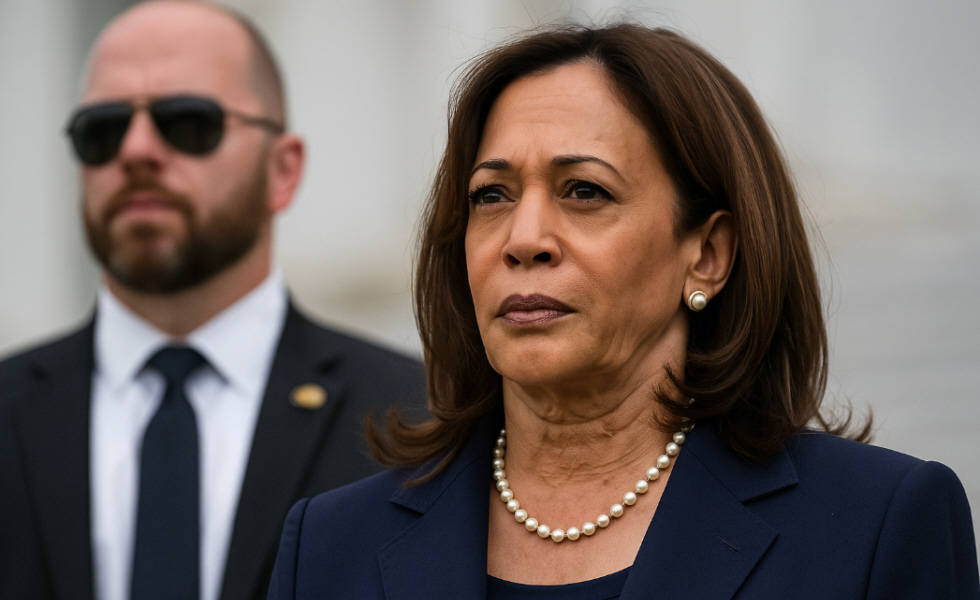
The President Donald Trump has stirred controversy by ordering the removal of Secret Service protection for former Vice President Kamala Harris. The decision, effective September 1, was confirmed by Secret Service officials and has been widely interpreted by analysts and critics as a politically motivated and retaliatory move.
Harris, who was Trump’s main rival in the 2024 election, will thus lose a security coverage traditionally extended to former presidents and vice presidents due to the risks they continue to face even after leaving office.
The announcement took both the political class and the public by surprise, as never before has a former president revoked protection from such a high-ranking former official. According to security experts, this measure could expose Harris to heightened risk, given the polarized political climate in the United States and the recurring threats against public figures.
Trump’s administration defended the move by arguing that security coverage entails high costs for the state and is unnecessary once a former official no longer performs official duties. The reaction was swift. Democratic lawmakers denounced the measure as “political retaliation” and warned that it could set a dangerous precedent for the institutional protection of former leaders.
Even some Republicans expressed concern, noting that the security of former top officials should remain above partisan disputes. The controversy is expected to escalate in Congress, where proposals are already being discussed to guarantee lifetime protection for former presidents and vice presidents, regardless of which party holds power.
This episode once again places the spotlight on the use of presidential power for personal or political purposes, as well as the fragile balance between national security, institutional tradition, and the deep polarization shaping the American political landscape.