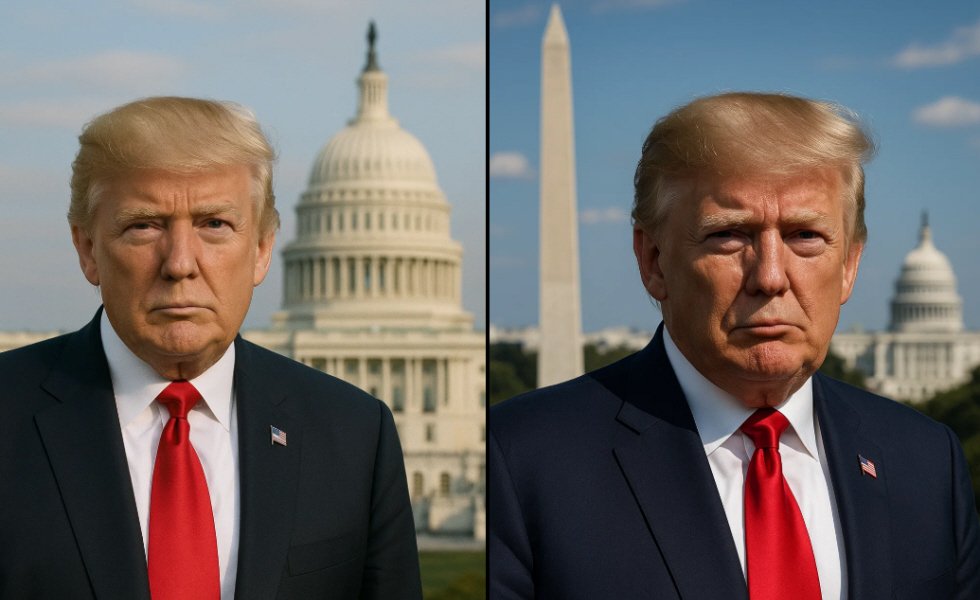
President Donald Trump reignited controversy with statements that have been described as alarming both inside and outside the United States. During a White House conference on August 25, 2025, he declared that “maybe many Americans like the idea of a dictator,” though he insisted he does not consider himself one. His words came as he defended a series of measures that strengthen federal control in the capital, including the deployment of the National Guard and new executive orders granting greater power to the central government over Washington D.C.’s police.
Trump justified his actions in the name of security and public order. He argued that the capital city is experiencing a rise in crime and protests that, in his view, require firm responses. He stated that much of the American people support “strong” decisions to confront insecurity, even if it means granting more executive power to the president. “People want real and fast solutions, not endless debates.
Some say they prefer a strong leader, a dictator. I am not one, but many are asking for it,” Trump said defiantly. The measures include a more active role for Defense Secretary Pete Hegseth in coordinating the National Guard and overseeing security operations. In addition, Attorney General Pam Bondi was authorized to assume powers over the local police, effectively allowing the Executive Branch to intervene directly in the administration of justice in the capital.
This decision sparked strong criticism, particularly from Democratic leaders and civil organizations who warn of a serious setback in democratic guarantees. Critics argue that Trump’s rhetoric dangerously approaches the normalization of authoritarian practices. They point out that by justifying unchecked executive power in the name of order, there is a risk of undermining the independence of institutions and respect for fundamental rights.
Constitutional law experts have warned that these actions not only strain relations with local governments but could also set a precedent for broader federal intervention in cities governed by political opponents. The opposition reacted immediately. Democratic Party spokespeople accused the president of “flirting with authoritarianism” and of using fear of insecurity as a pretext to concentrate power. Analysts also note that this type of statement carries a strong electoral component:
Trump seeks to present himself as a “tough” leader capable of making immediate decisions, a discourse that resonates with sectors of the population tired of political polarization and the slow legislative process. Amid this panorama, American society remains divided. On one side, there are those who support Trump’s narrative and believe that a strong leader is necessary to curb insecurity and restore order.
On the other, many voices warn that democracy cannot give way to authoritarianism. The phrase “maybe we like a dictator” thus becomes a symbol of the current debate: is the United States seeking to reinforce its democratic tradition, or is it willing to open the door to leadership with autocratic overtones?