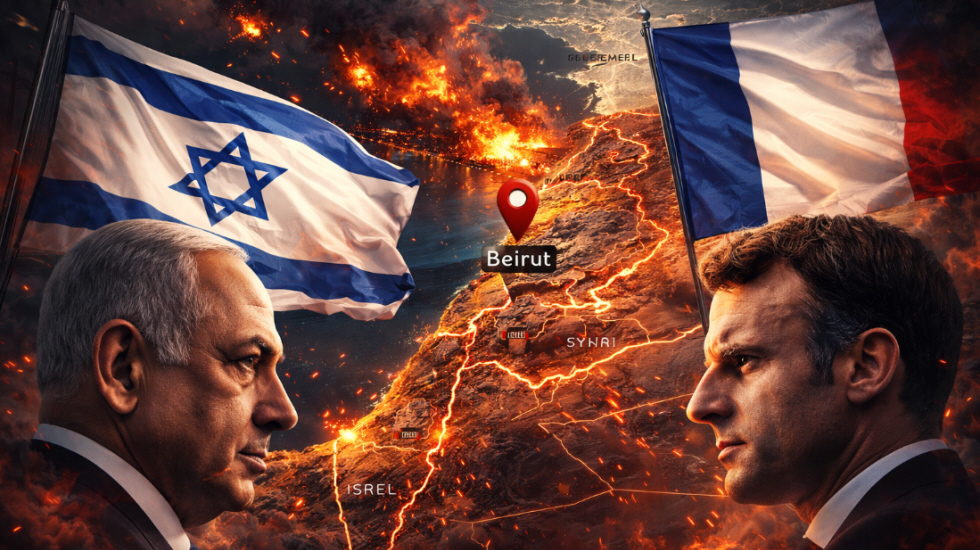
Israel has decided to exclude France from direct talks with Lebanon set to take place in Washington next week, signaling a clear hardening of its diplomatic stance. The move reflects a shift in trust toward international actors seeking to mediate one of the most sensitive conflicts in the Middle East. The decision has drawn significant global attention. According to sources familiar with the process, Israeli officials no longer view France as an impartial mediator.
This perception has developed over the past year following a series of positions taken by Paris that have caused concern in Jerusalem. Relations between the two countries are now visibly strained. From Israel’s perspective, France has supported initiatives that could limit Israel’s ability to respond to regional threats, particularly those linked to Iran. This stance has been interpreted as a lack of understanding of Israel’s security challenges. The result has been growing diplomatic distrust. Israel has also criticized France for failing to take concrete steps toward disarming Hezbollah in Lebanon.
The group remains a central concern for Israel and a key issue in any regional negotiation. The lack of progress on this front has further weakened France’s credibility as a mediator. The upcoming talks in Washington aim to reduce tensions along the Israel-Lebanon border, where incidents have escalated in recent months. The United States is once again positioned as the primary mediator, reinforcing its dominant role in the region. France’s exclusion marks an important precedent in international diplomacy. European countries have traditionally played significant roles in Middle East negotiations.
However, this development suggests a shift in influence and priorities. Analysts believe Israel is sending a strong message: it will only accept mediators aligned with its security priorities. This approach could reshape future negotiations and limit the participation of certain global actors. For France, the decision may represent a symbolic and strategic setback. Being left out of key talks could weaken its influence in the region and strain bilateral relations with Israel in the near term.
At a deeper level, the situation reflects broader tensions between European diplomatic approaches and Israel’s security-focused strategy. While Europe often promotes balanced negotiations, Israel emphasizes decisive responses to immediate threats. Ultimately, France’s exclusion from Israel-Lebanon talks is not an isolated event but a sign of deeper changes in Middle Eastern diplomatic dynamics. The outcome of the Washington discussions will be critical in shaping the region’s evolving balance of power.